
I admit, there was a few times I questioned if we were in over our heads. Was this trail too hard? Too long? Our packs too heavy? Were the kids still too young to take on one of the most difficult treks in the world?
The children of an ultra runner who knows no limits, and a mountain biker who knows no fear, get dragged on all kinds of adventures their peers would never dream of, but there were moments I questioned if even we belonged out there on the rugged coast with our kids.
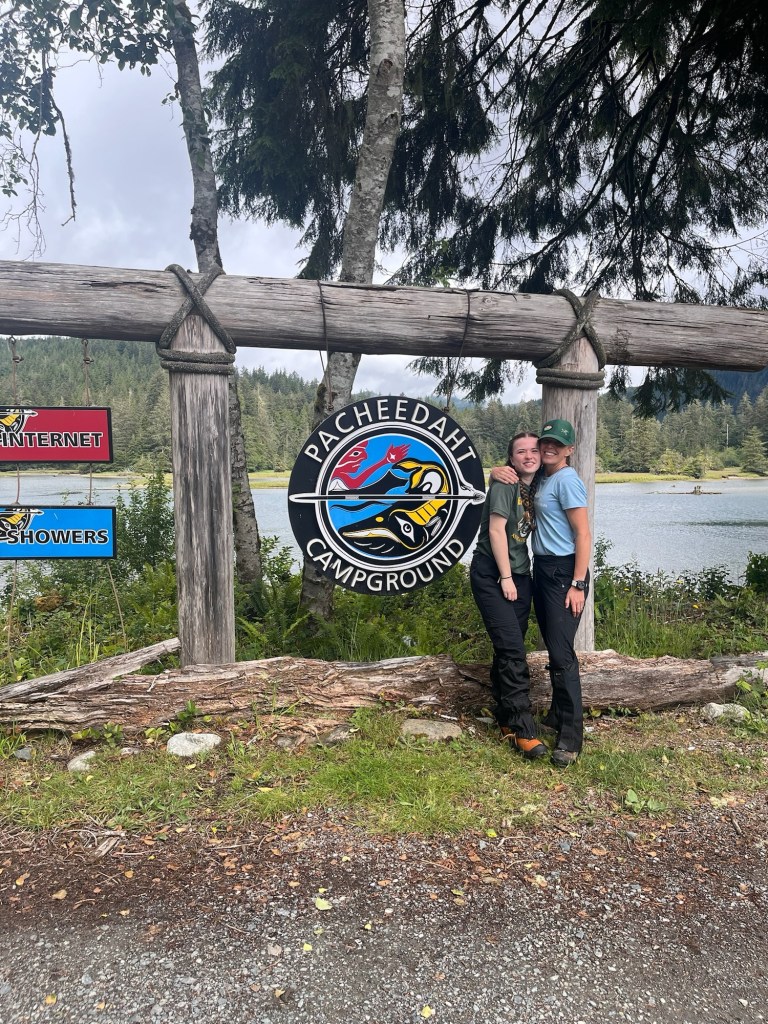
Just the thought of packing enough food for six days on the trail to feed five athletes was overwhelming. And indeed the weight of all that food felt crushing as we shrugged our packs on and walked from the Parks Canada office at the Gordon River trailhead, to the boat that was waiting to escort us to the gruelling south end of the world renowned West Coast Trail.
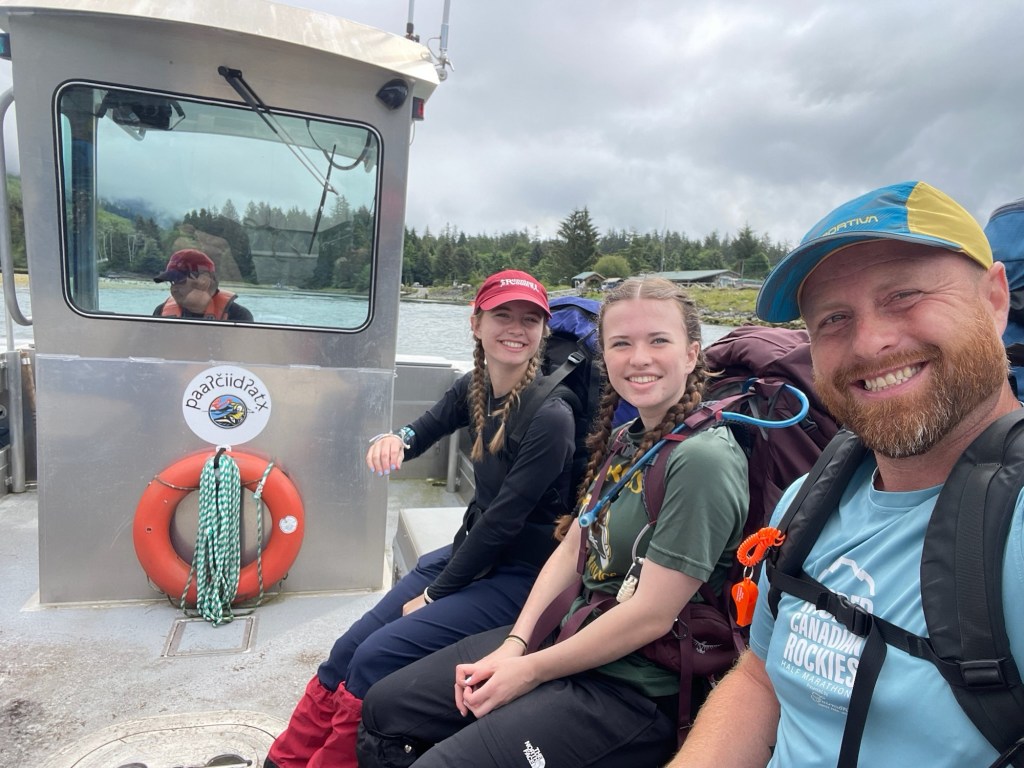
The first camp site is an alleged 5km in, but we were warned it took people from 5-10 hours.
“What?” I scoffed, “How can anyone possibly move so slowly?”
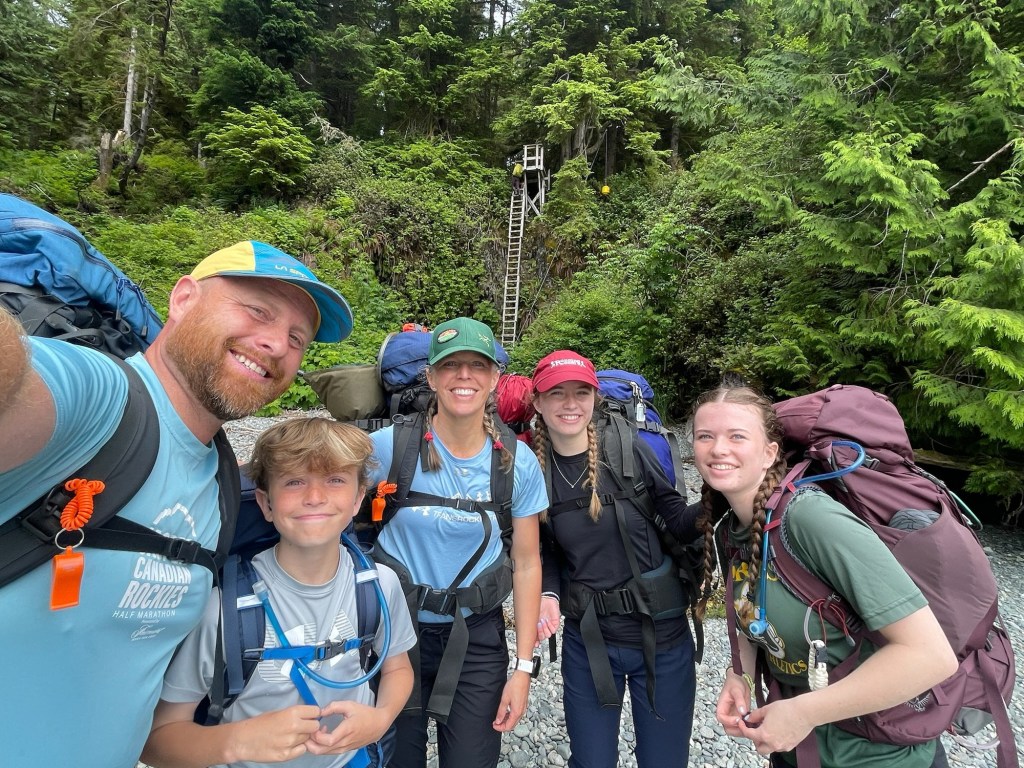
How quickly I was humbled.
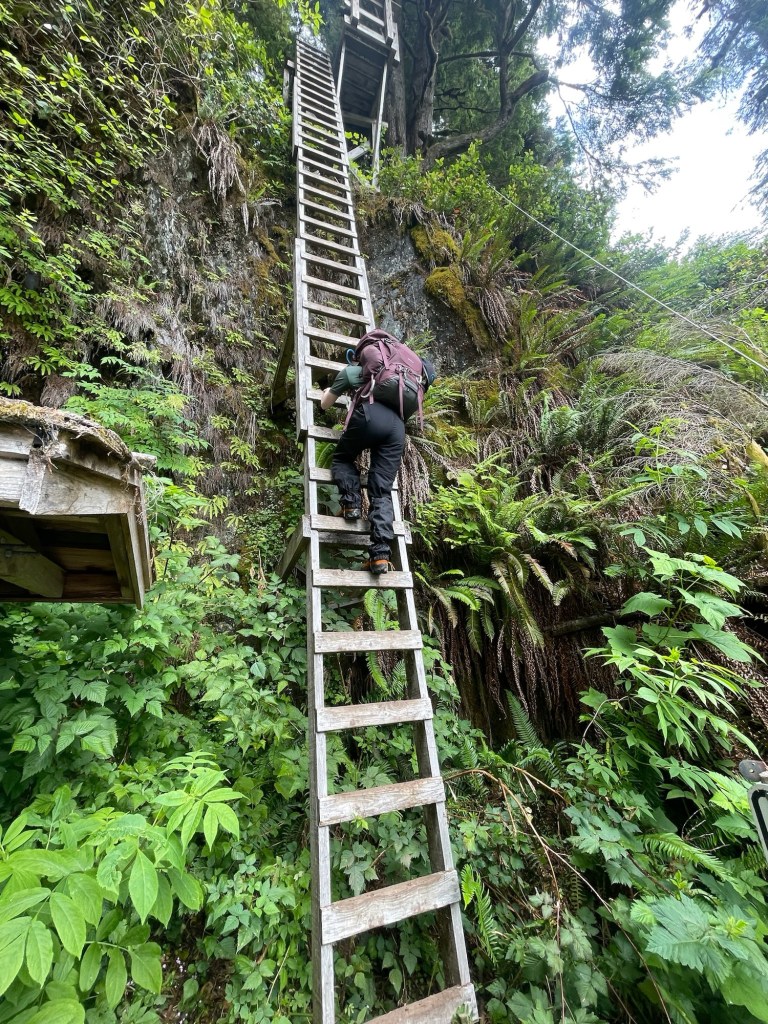
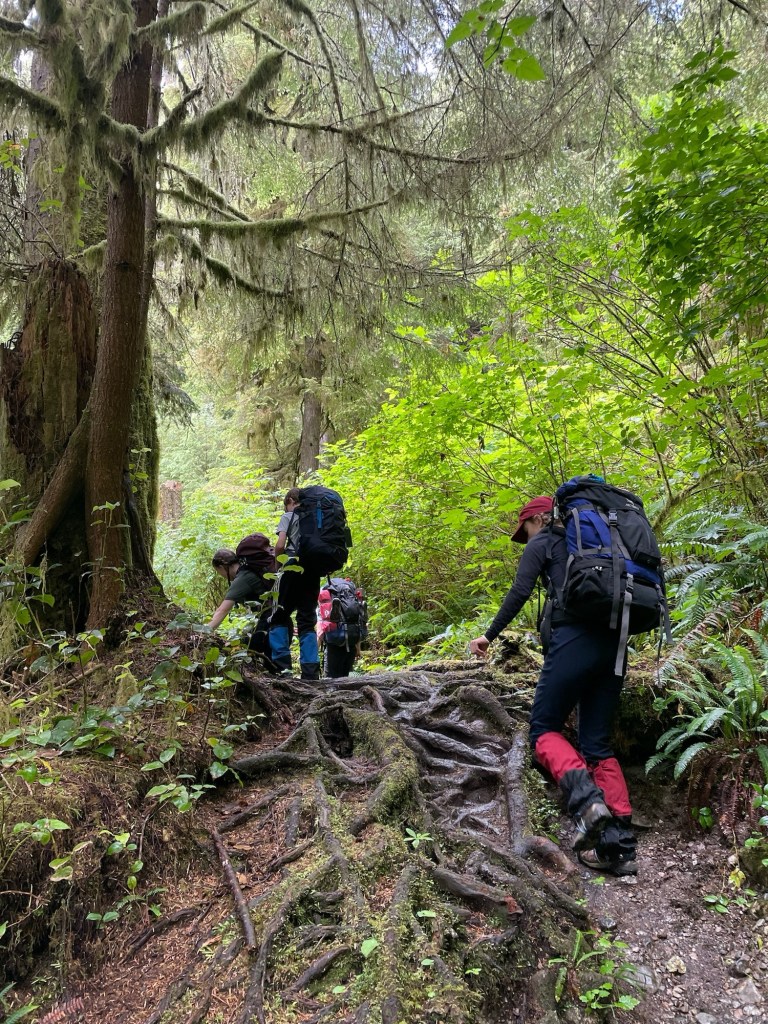
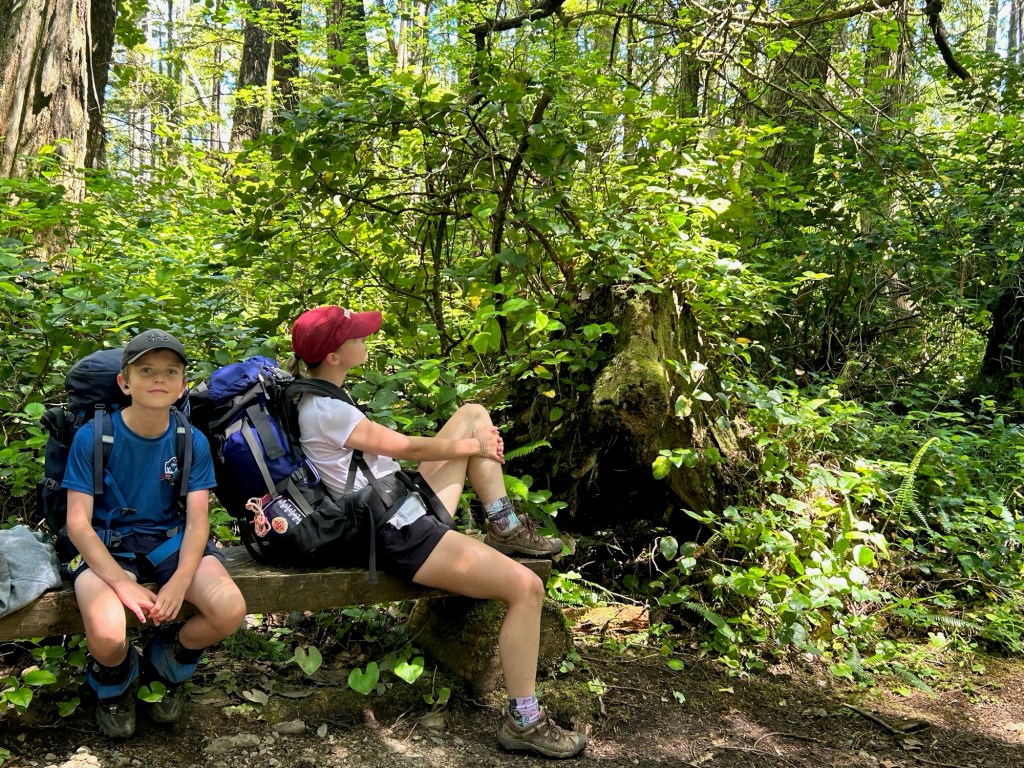
Clearly, years of ultra running has distorted my perception of distance, but a 40lb pack brought me back to focus as the reality of ladders, roots, rocks and mud on the meandering trail took us over 5 hours to our first spot for the night. Just over 1km per hour.
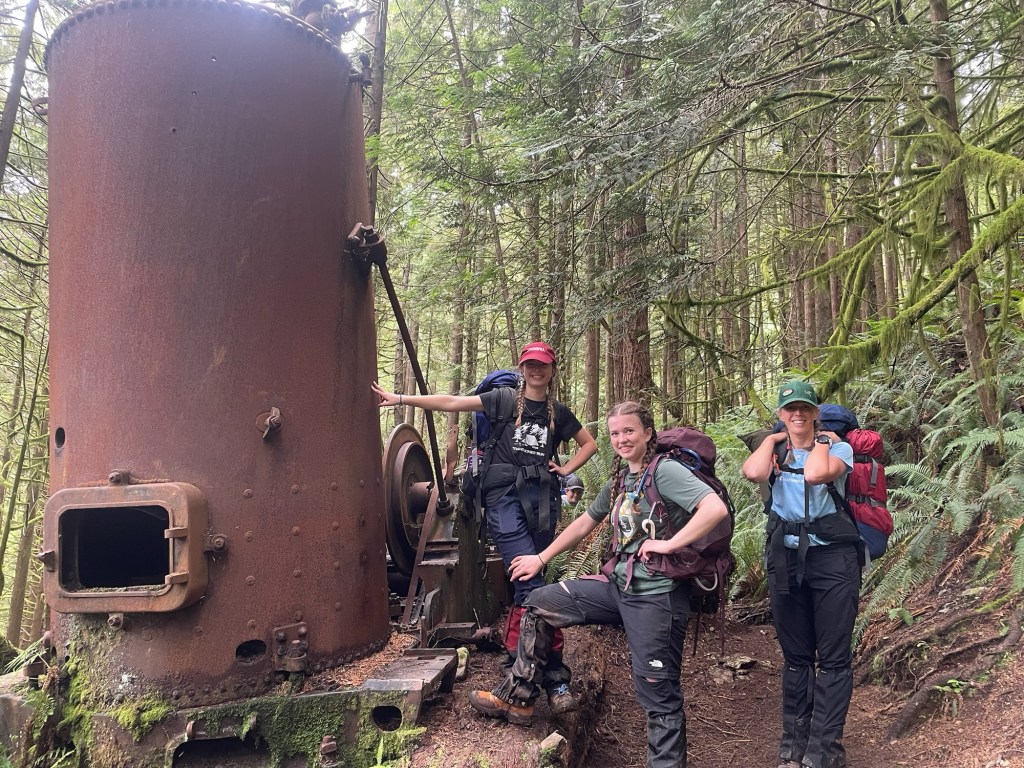
How are we possibly going to cover another 70 “WCT” kilometres in 5 more days? I use quotation marks because we started to qualify the distance we covered each day by “WCT” kilometres vs the much longer distances recorded on our Garmin. Garmin told us we went closer to 90km over the week instead of the 75km the maps showed.
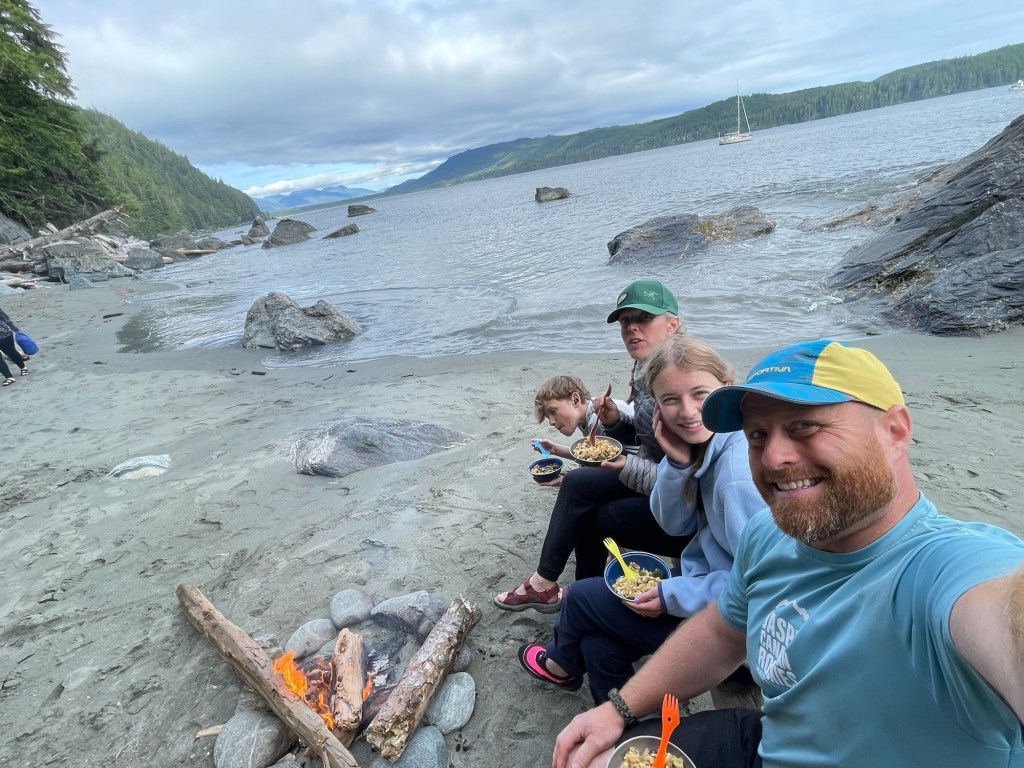
The first night was chilly and the tide was rolling in as we quickly set up camp and devoured our first dehydrated meal at Thrasher cove. By midnight, the tide had risen so high I was peeking out the tent to check if the waves were going to sweep us away because it sounded so loud. I struggled to quiet my mind about all the potential disasters we could face this week and toss and turned all night, while the waves retreated and an otter family skittered around our tents.
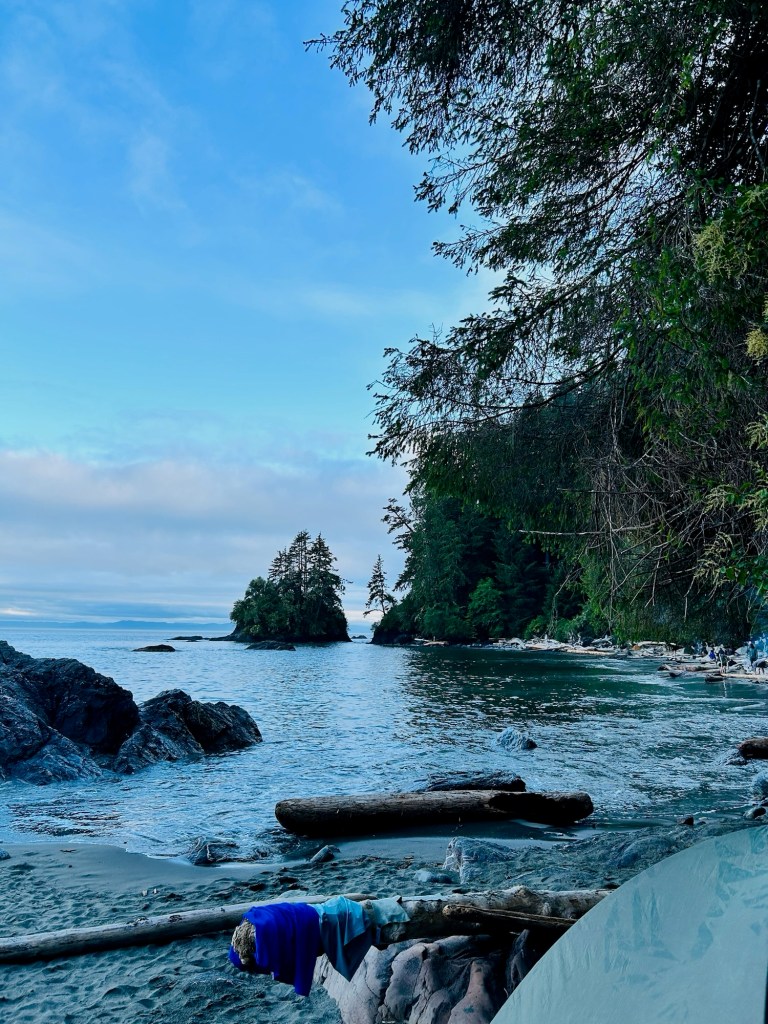
Day two brings one of the pinch points where timing of the tide becomes crucial for safe passage. From Thrasher Cove we needed to cover 3 km of scrambling over boulders to get to Owen point by low tide at noon. Given our painstaking pace the day before, we weren’t sure how realistic it was.
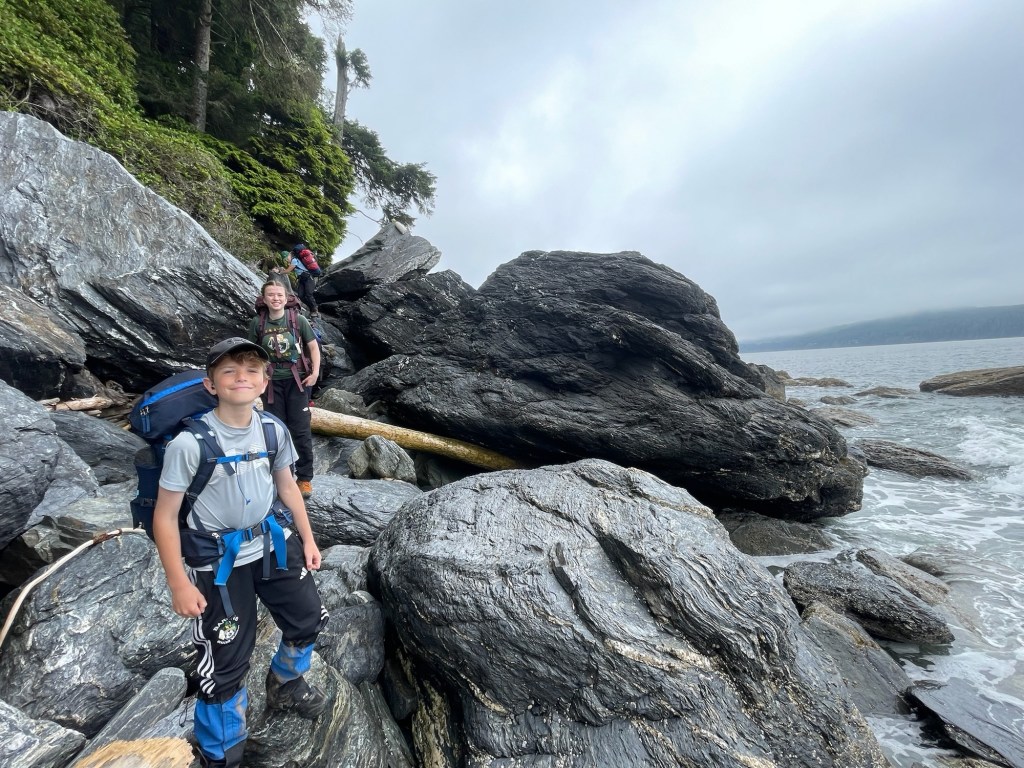
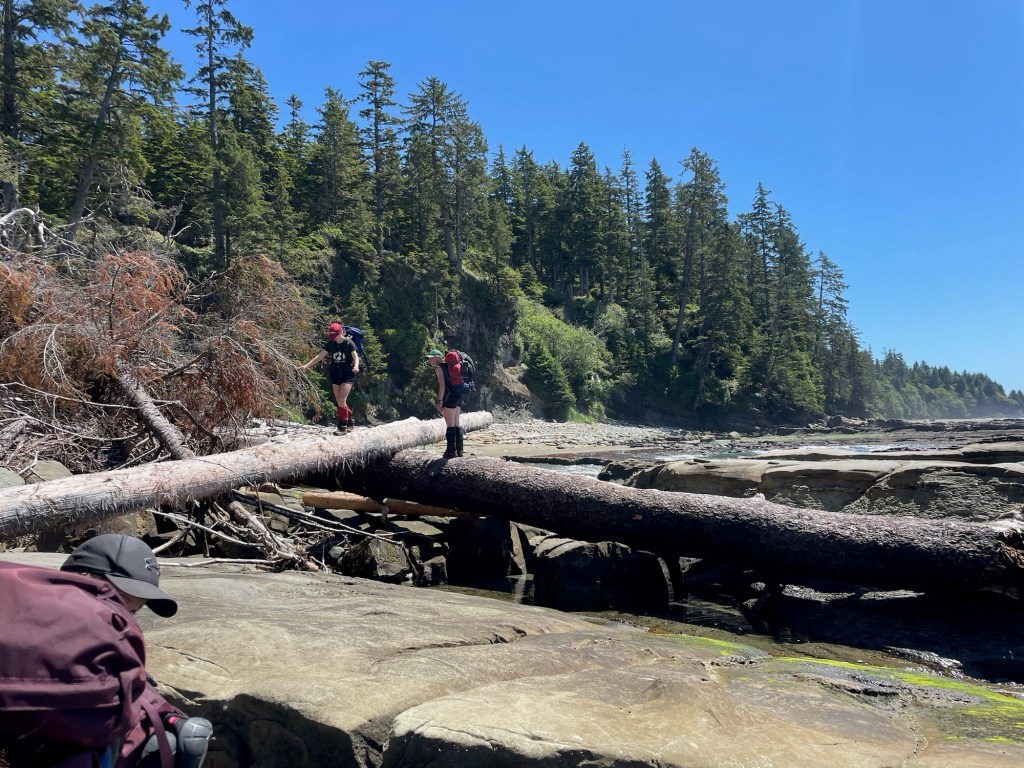
Scaling massive boulders and climbing over driftwood cedars, we made it to Owen’s Point in decent time, and even opted to eat lunch there to kill time and allow the water level to drop a little more to make passing the point easier. Noodles, Whale watching and soaking up the warming sun, thinking maybe we would be ok.
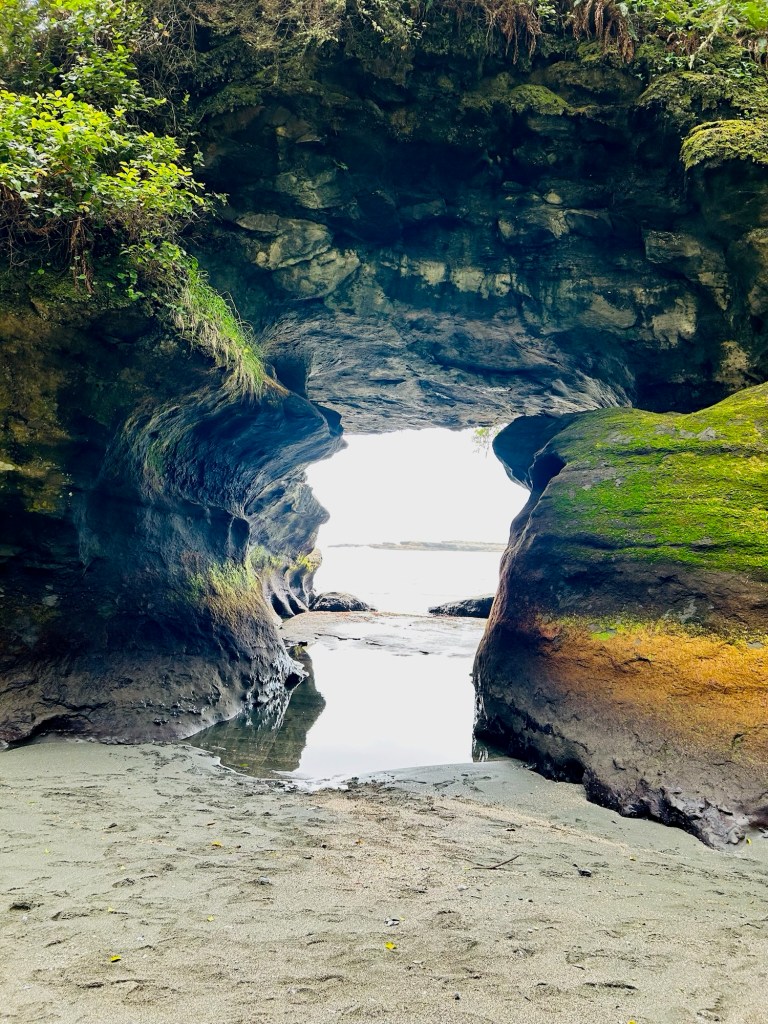
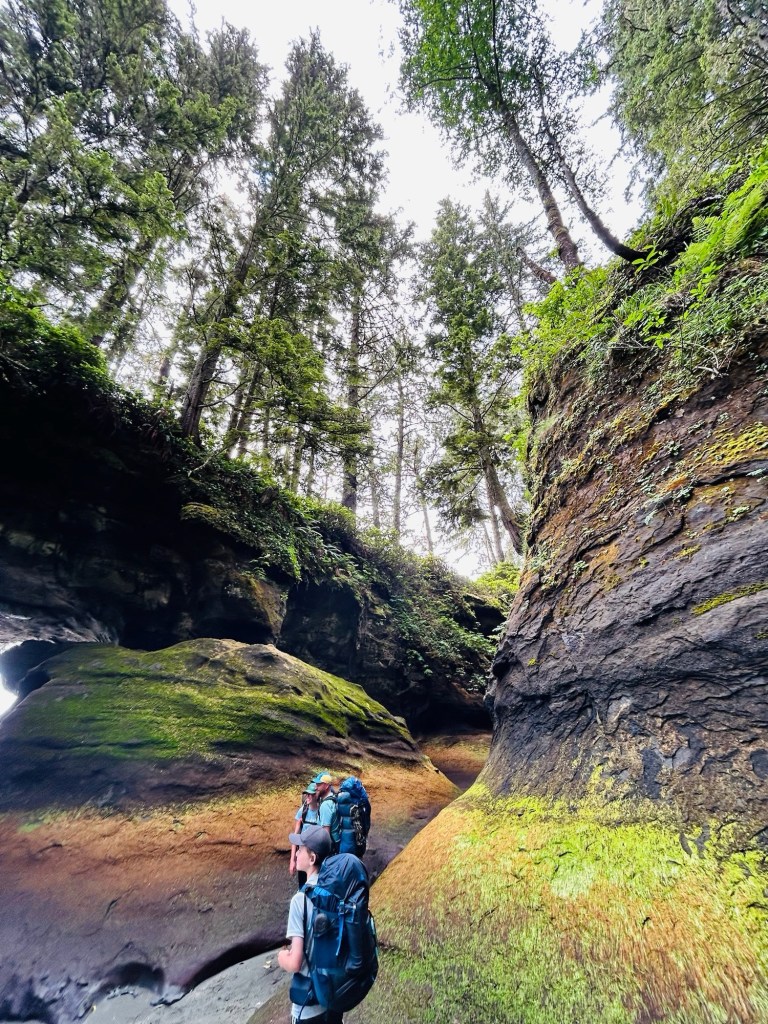
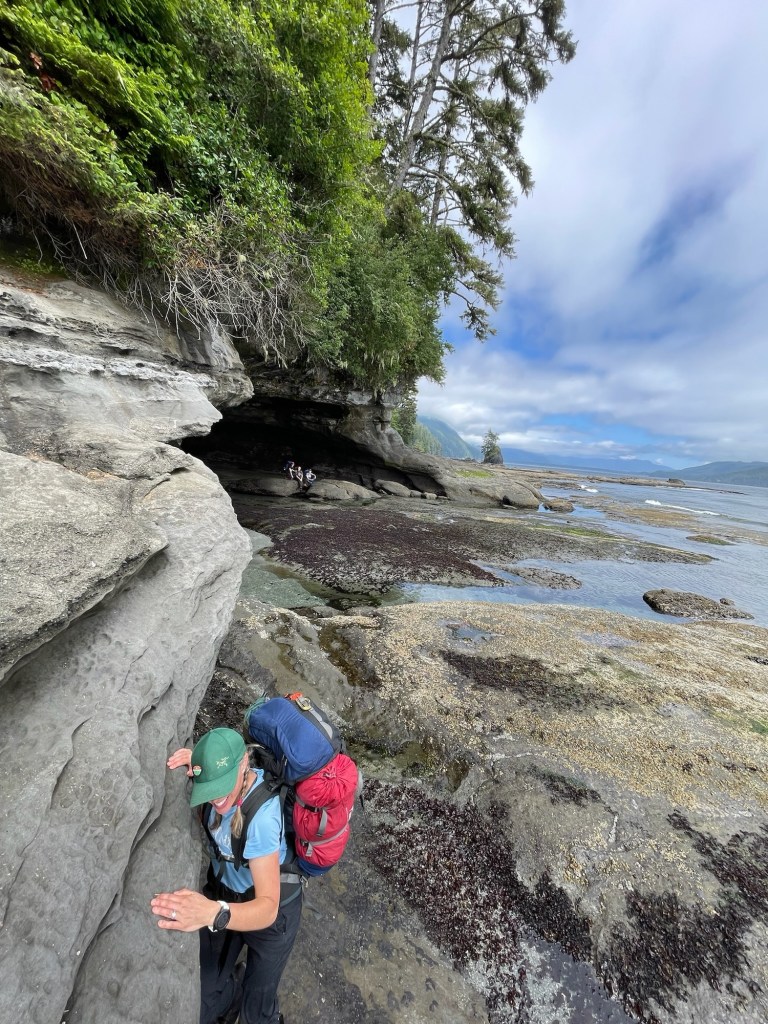
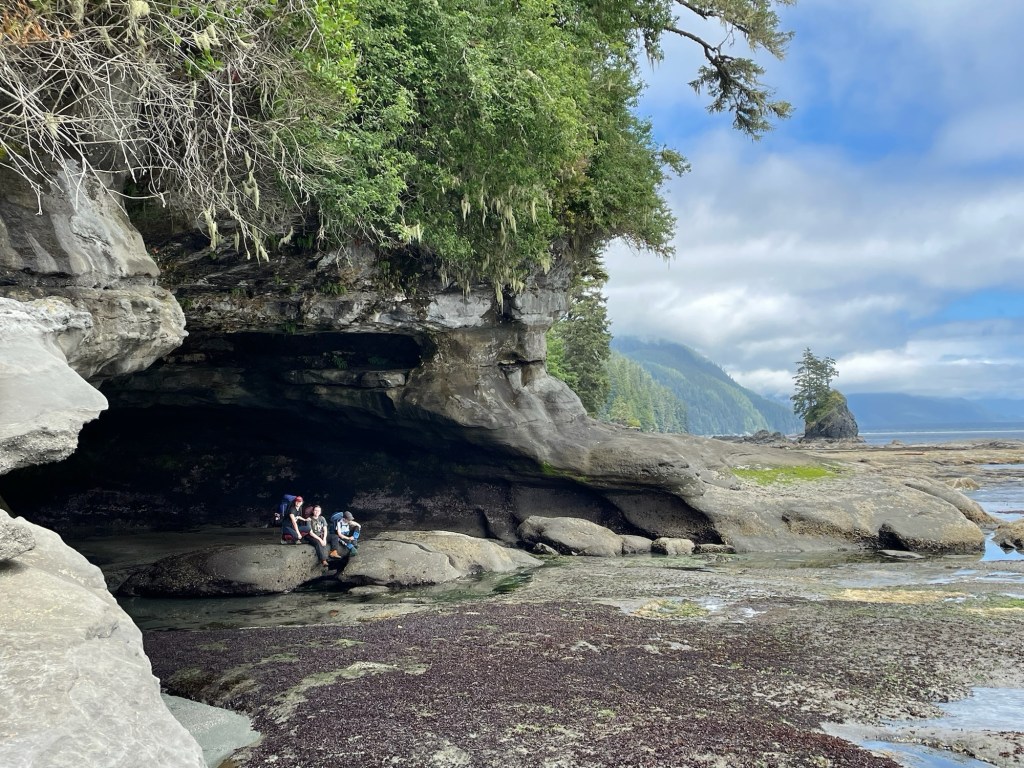
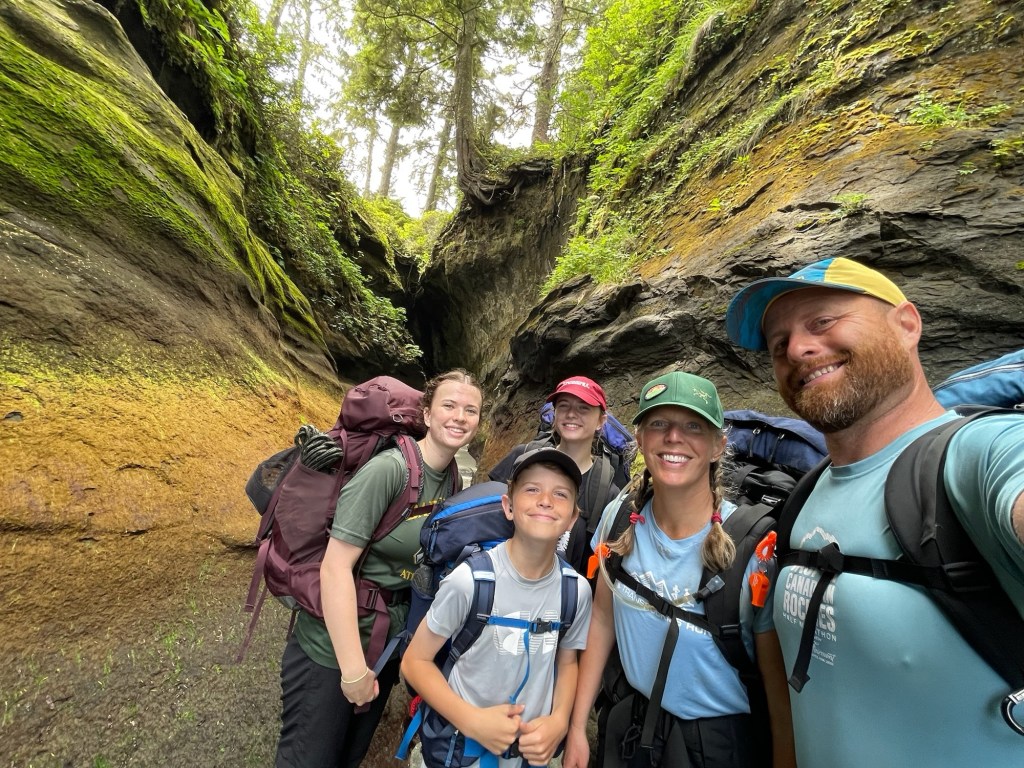
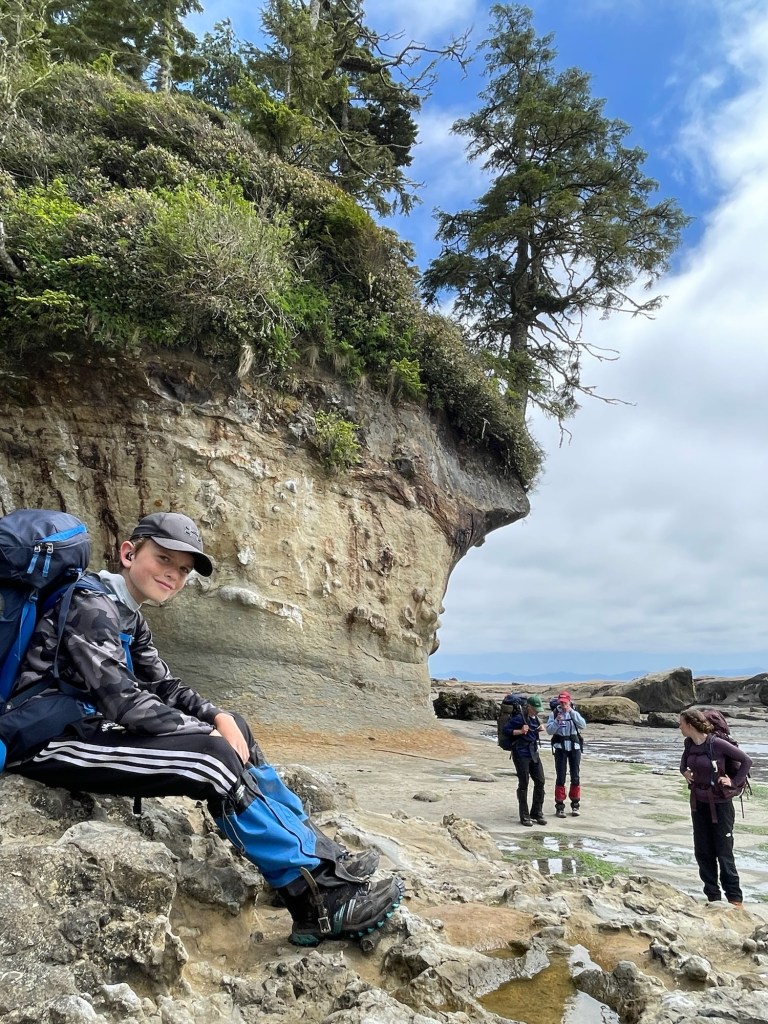
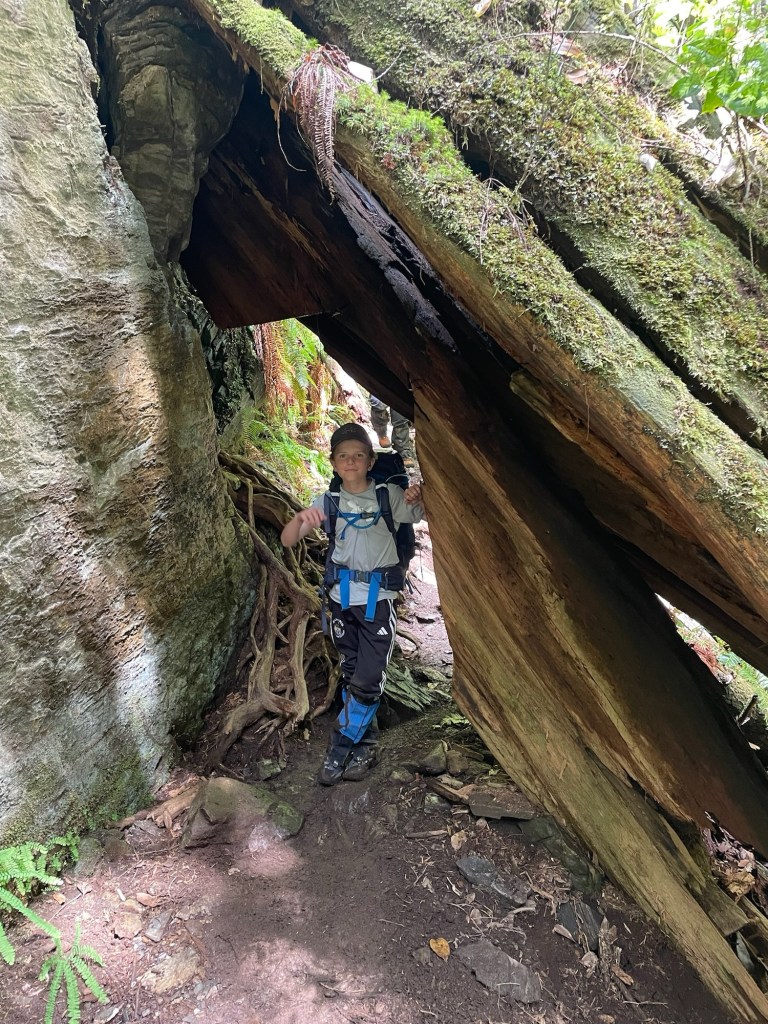
Thankfully the kids were proving to be absolute rock stars about the challenge, and were navigating the terrain with bravery and positive attitudes all around. A ways past Owen’s Point, we saw the hanging bouys in the trees, signalling that it was time to go from the beach back to the trail where it seemed like we entered an alternate moss-covered universe where time slowed down and distance warped into unmeasurable units.
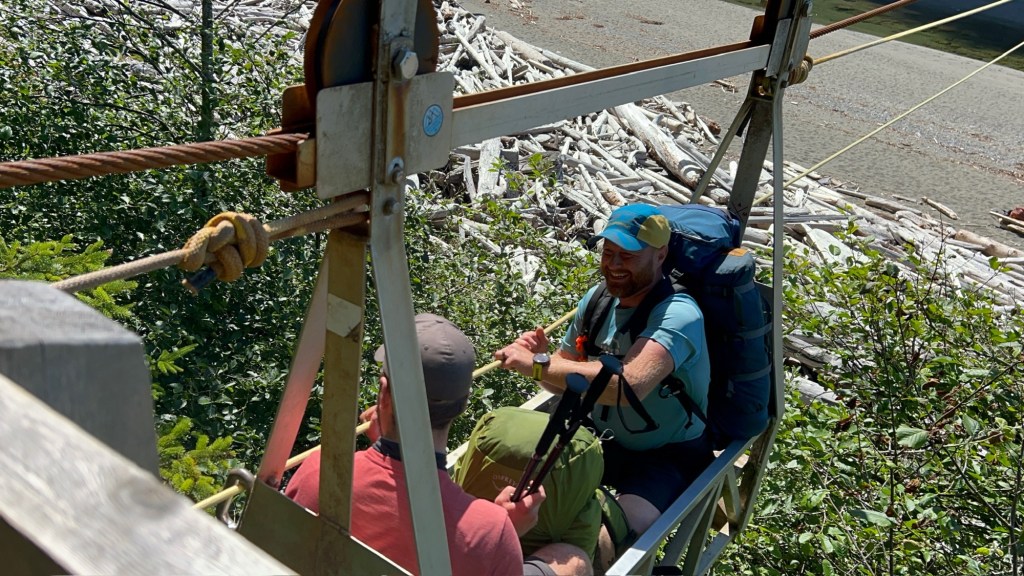
After another long day, at what felt like an impossibly slow pace, we took a cable car across a river and popped back onto the shore at Camper Bay, a beautiful camp spot tucked away amongst towering trees.
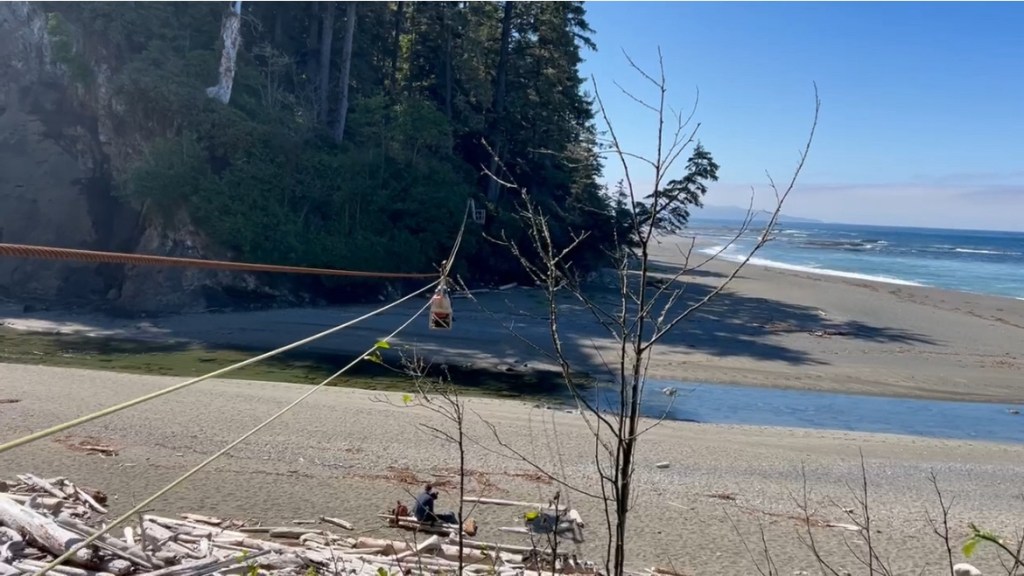
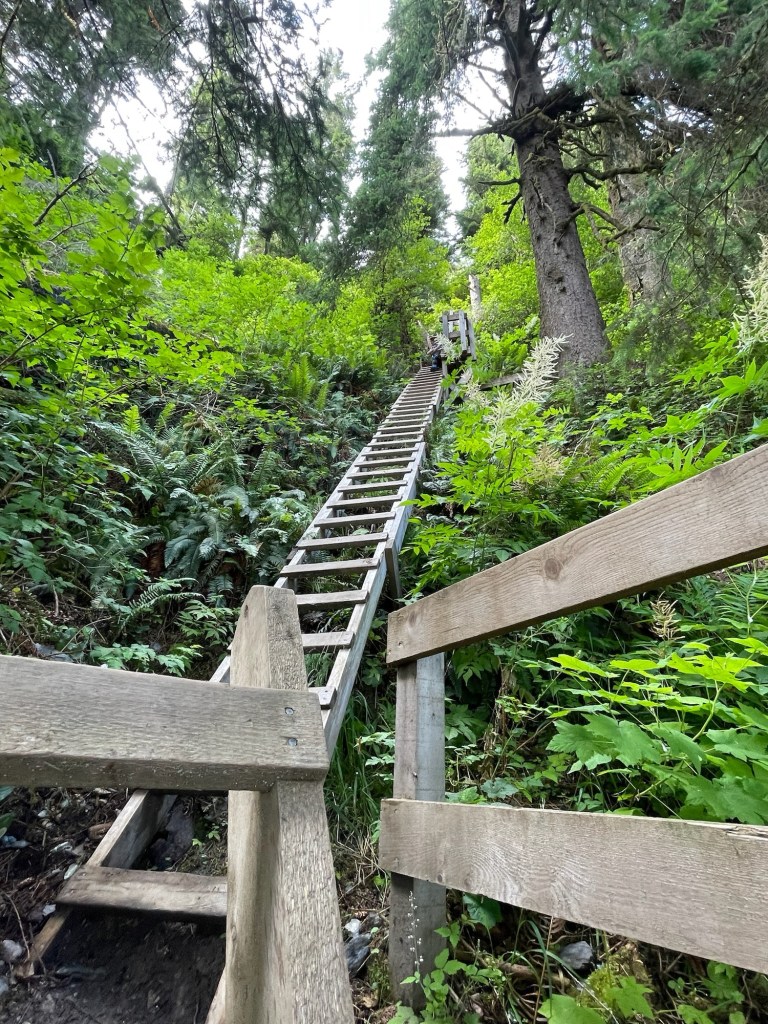
We had been warned that Day 3 was the ‘Ladder Day’ and we would need to get our arms ready to work hard. There had already been plenty of ladders to climb, in addition to bridges, cable cars and boardwalks that help make the trail a possibility amidst such dense vegetation and so many creek crossings.
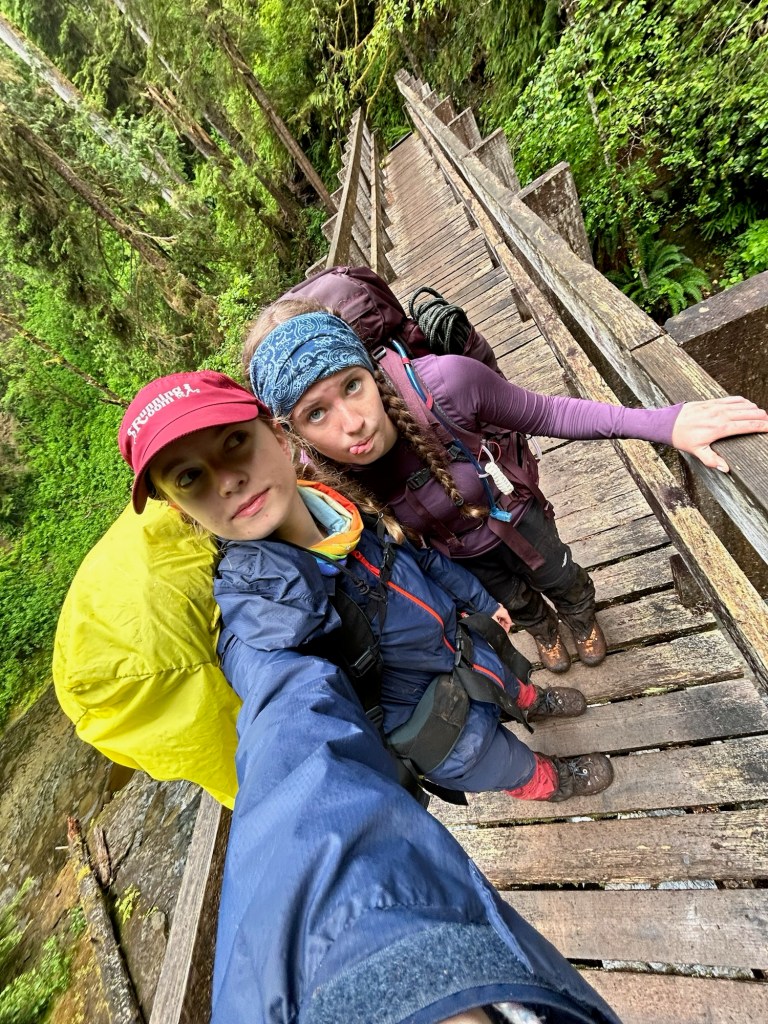
Unfortunately, it appeared that there had been little to no trail maintenance done on any of the infrastructure since the last time I completed the trail in 2004. Many of the boardwalks, especially on the south end, where the forest is especially dense and boggy, are completely rotted and reclaimed by the mud. Some of the ladders have loose or missing rungs, and several of the bridges are collapsed, forcing hikers to traverse sections by balancing on fallen logs several feet off the ground. Trail maintenance issues have been an ongoing part of the tension between Parks Canada and First Nations groups the trail passes through since the trail first became popular for hikers in the late 1970’s. It’s a complicated situation where issues of colonization, environmental protection, recreation and indigenous sovereignty collide. Sadly, the complexity of the issue has resulted in a world class trail (which hikers pay a lot of money to access!) turning into a safety hazard, and even an embarrassment and environmental tragedy in areas where the forest is being trampled to avoid hiking though huge boggy mud pits. I’m not suggesting the trail should become a 75km boardwalk with no element of risk or challenge, and I think most hikers would agree that the difficult trail is part of the allure of the adventure. However, in the interest of continued environmental protection and safe passage for hikers, I hope the issues are resolved and much needed maintenance continues.
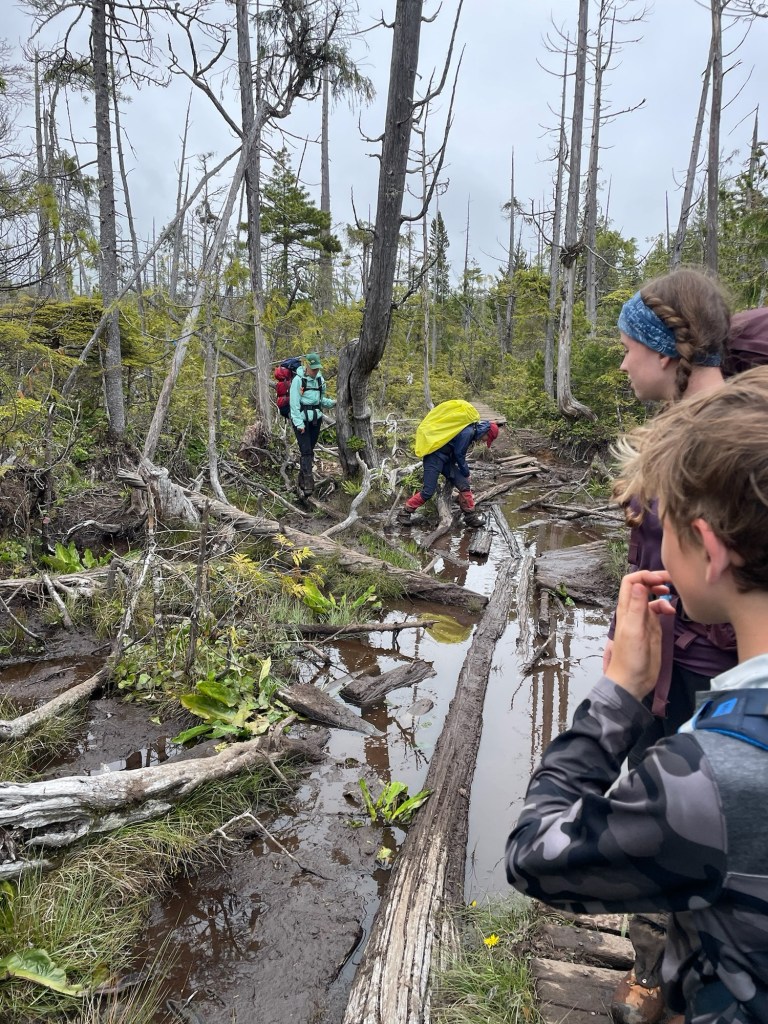
Day 3, the ‘Ladder Day’ was a minefield of dilapidated infrastructure , mud, mud and more mud. It was the only day of our whole trip with a little bit of rain, but the soggy spring so far meant that the sun had not had a chance to dry the trail up at all.
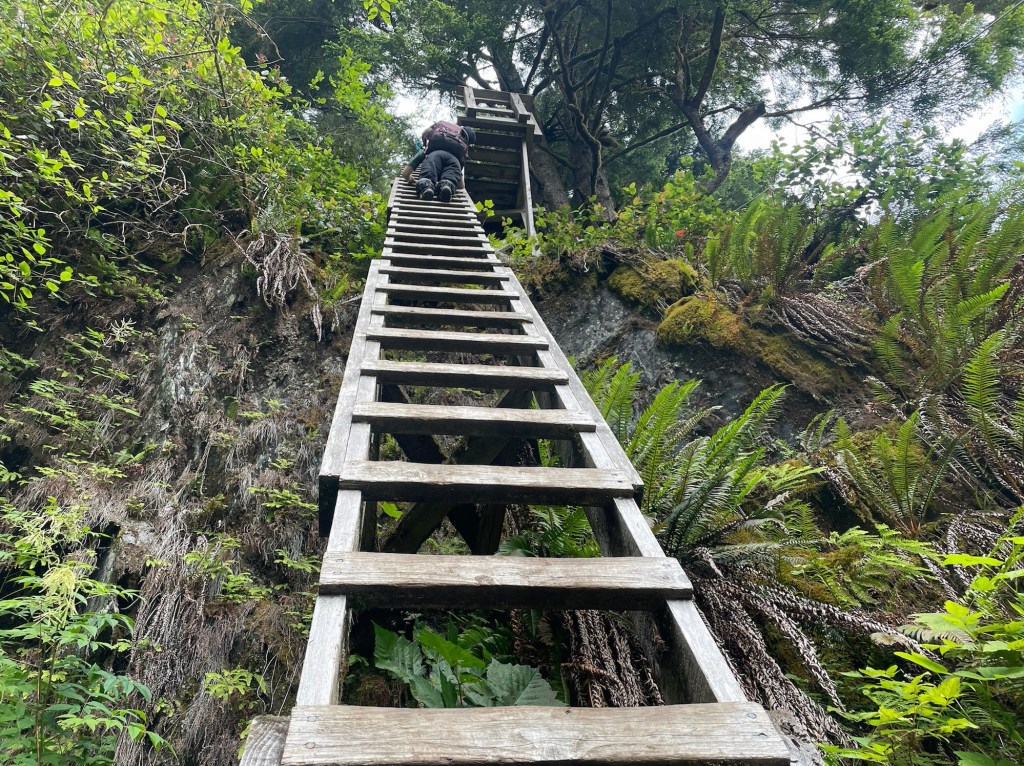
It was starting to take its toll on the kids. At one point, Katie stood over a huge bog, struggling to balance on a slippery log, and whispers through her tears of frustration that she wanted to go home. Tegan and Levi were also getting frustrated having to navigate so many difficult sections and so many long ladders, getting us down and then back up sections of the rugged coastline. Kirk and I looked at each other across the bog, shrugged, questioning what the heck we were doing.
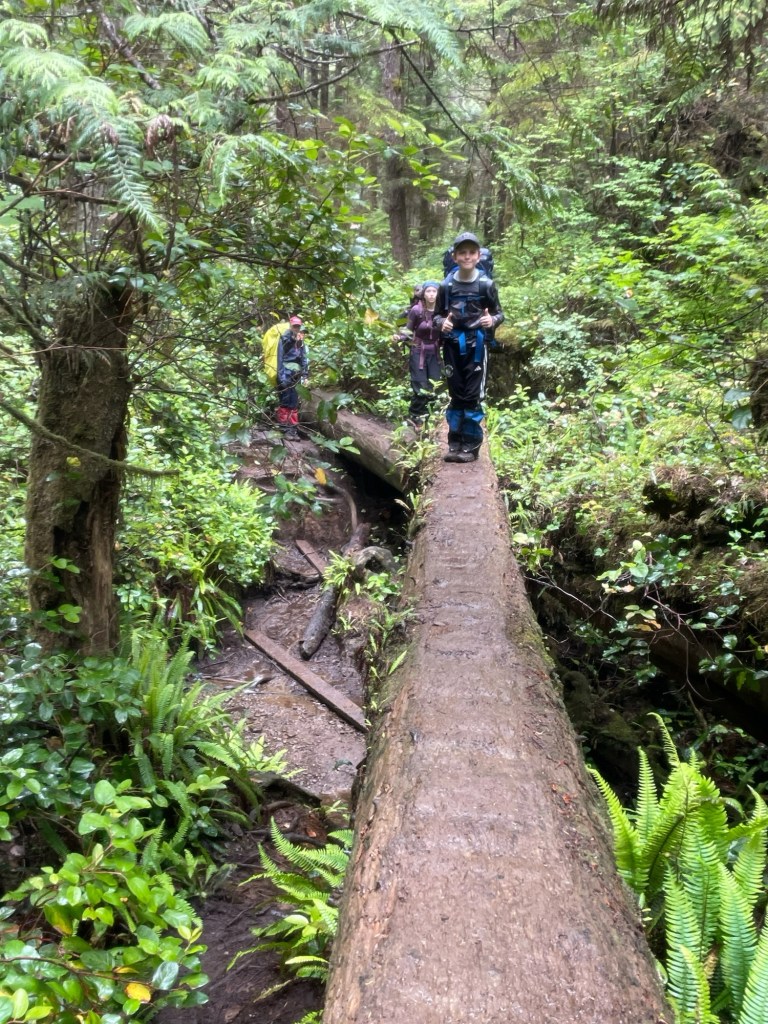
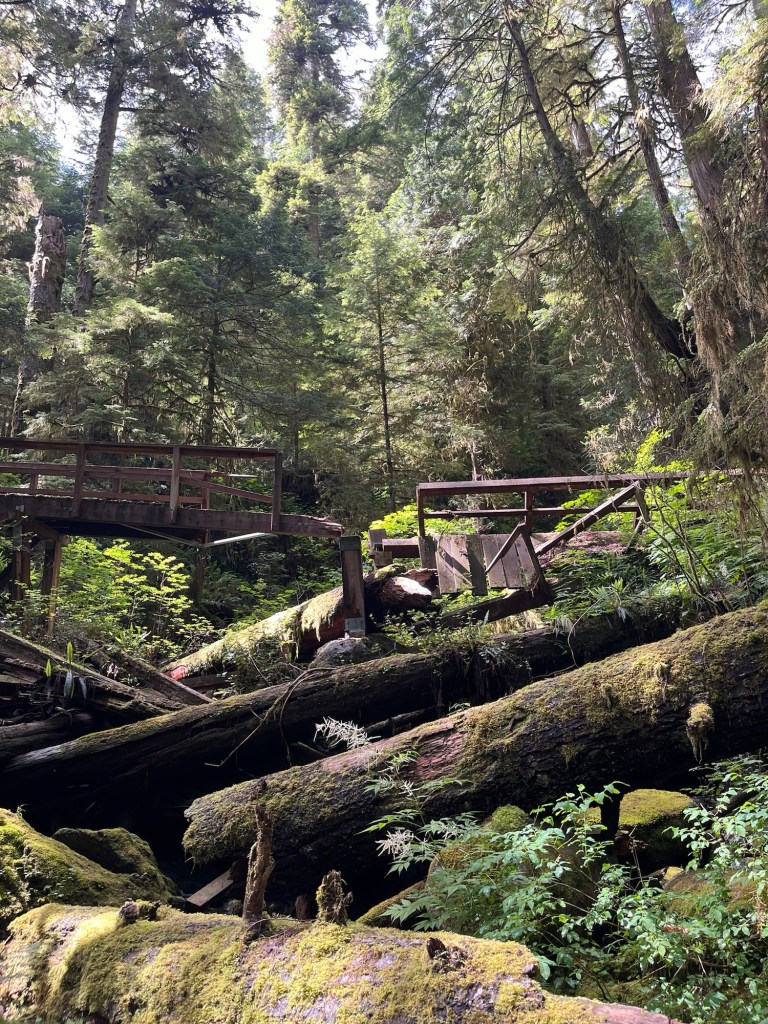
Another element of the trail is a few places you have to jump over a surge channel, a narrow inlet in the rocks that the ocean waves slam into, sending the water up and down the channel with incredible speed.
The mandatory safety video warns you to undo you backpack clips in case you fall in so it won’t pull you under. I watched as each of my kids leaped over the channel, each expressing various degrees of fear, each doing it anyway. All of us proud as we made it to the other side.
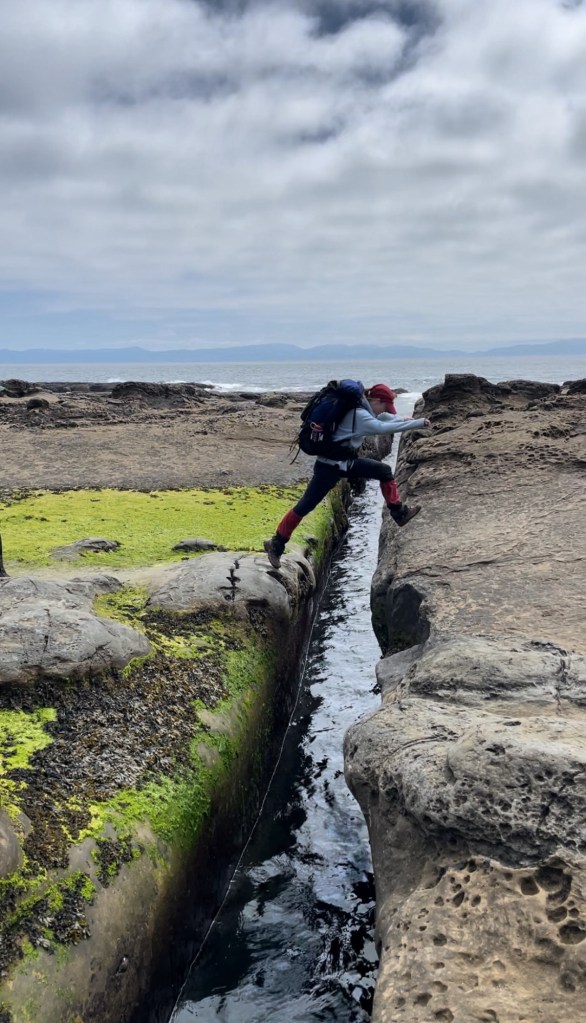
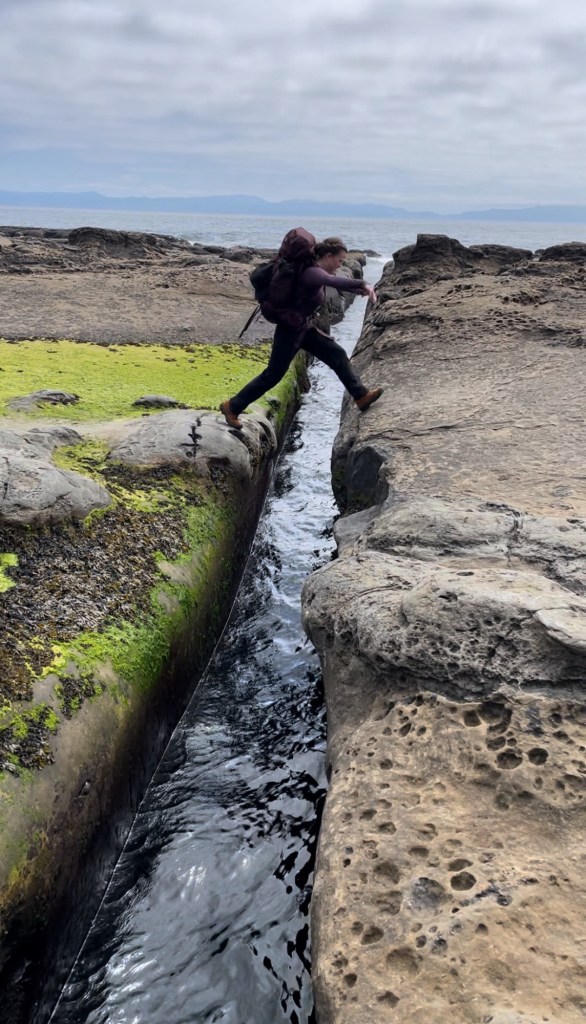
We were rewarded that night with the most spectacular campsite all to ourselves at Bonilla point. It featured a waterfall, creek, a fern covered cave and a campsite that fostered the fantasy that we were shipwrecked on a deserted island.
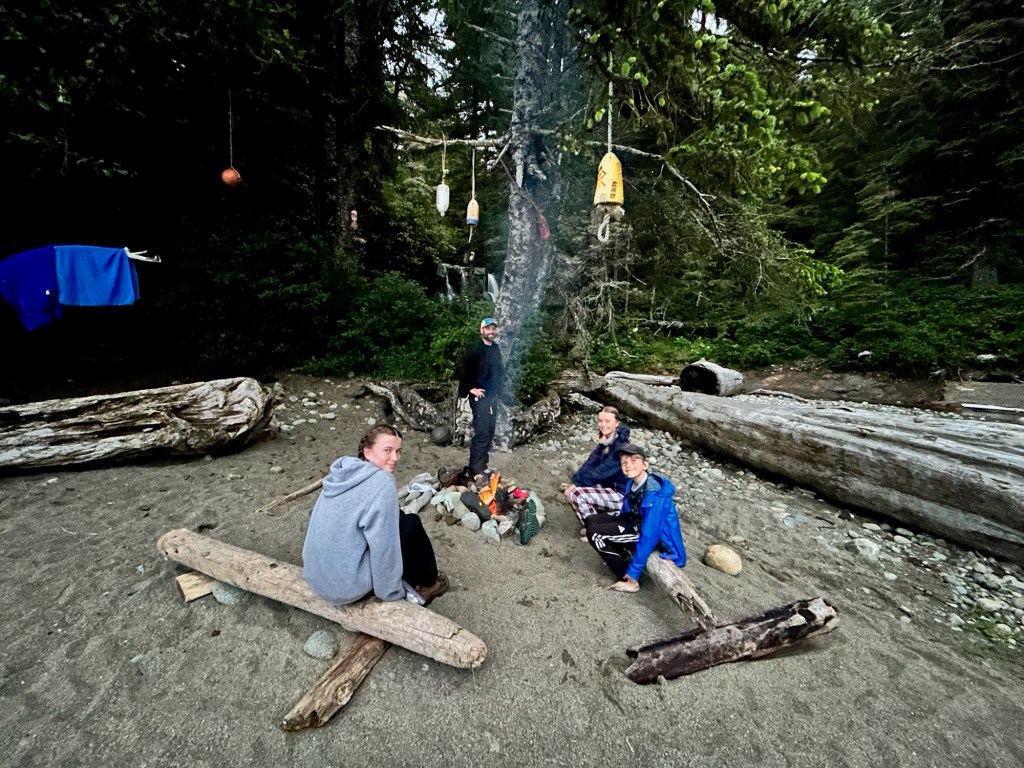
That became the tipping point for trail difficulty and we knew we would make better time on Day 4. With a nice dose of beach walking and less trail sections, we covered 27km that day, including a much anticipated stop at Nitinaht Narrows, the only glimpse of civilization along the trail. Continuing on the trail requires a short boat ride across Nitinaht Lake, and at the boat launch is a small canteen that offers fresh crab, potatoes, grilled cheese and other snacks. We arrived late in the afternoon, worried we would miss the last boat and so exhausted that if we had, we probably would’ve happily paid the exorbitant fees to camp at Narrows campsite. Instead we used our cash to buy loaded baked potatoes and a freshly caught crab-to-go.
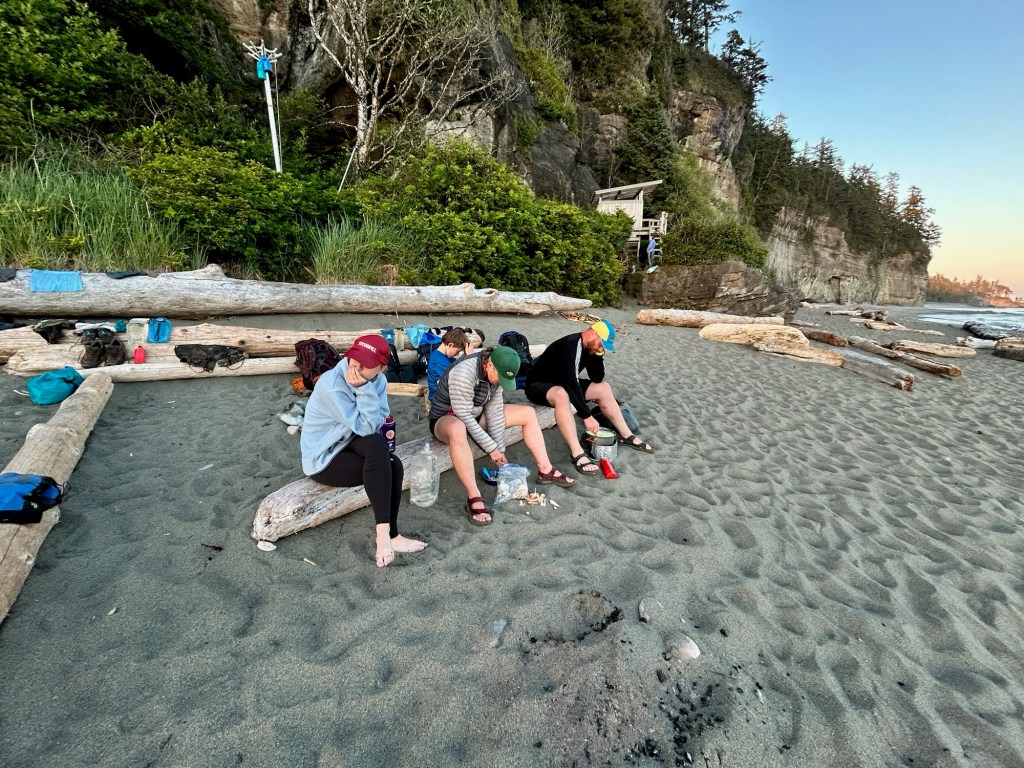
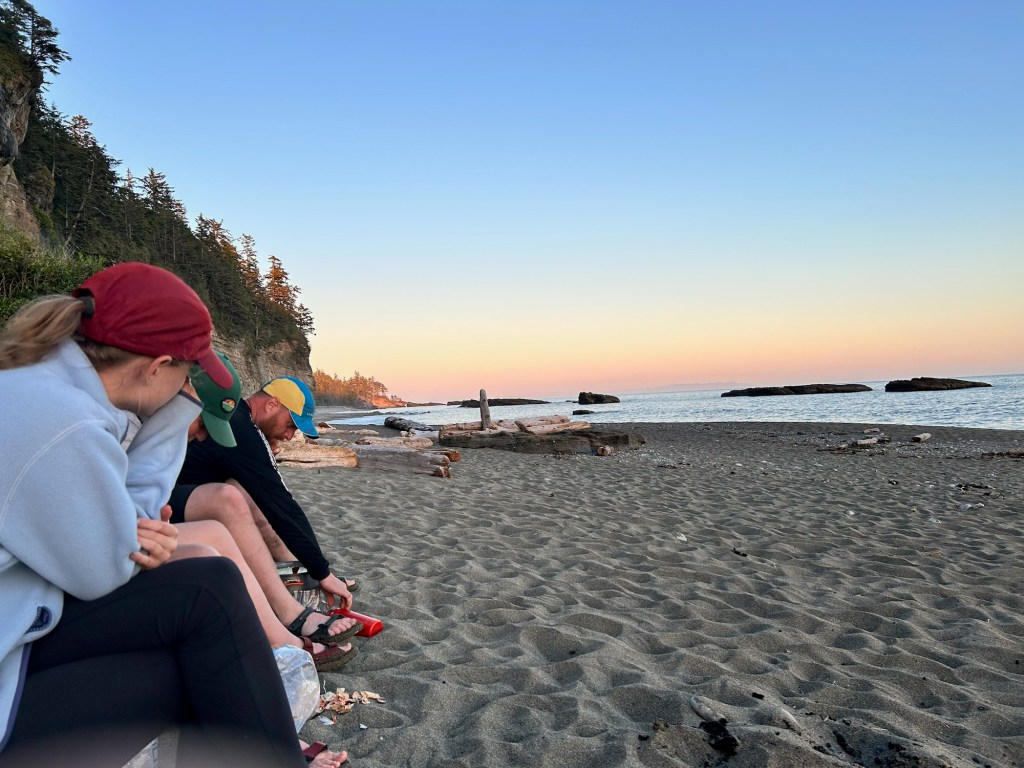
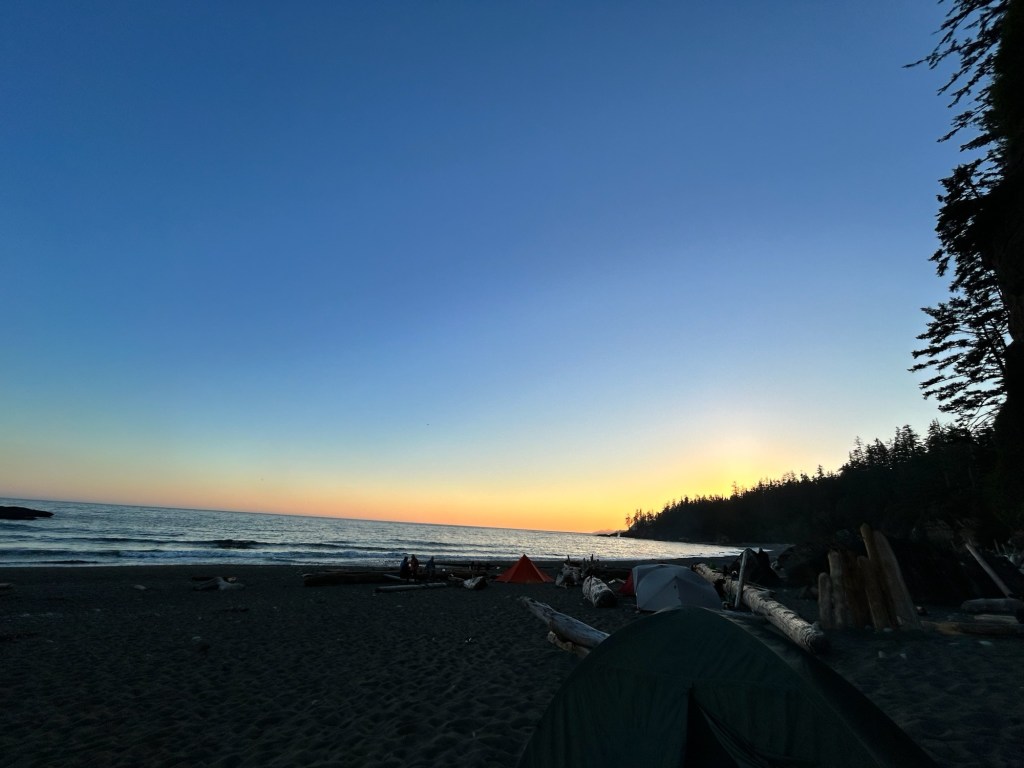
A couple more difficult kms on trail and we arrived at Tsusiat falls as the sun was starting to get low on the horizon. We scrambled to set up camp and start cooking, so we could enjoy our meal (there was never enough food in the pot!) while the sun set. We shared a fire with some other hikers and climbed into bed to the lullaby of waves rolling up the beach.
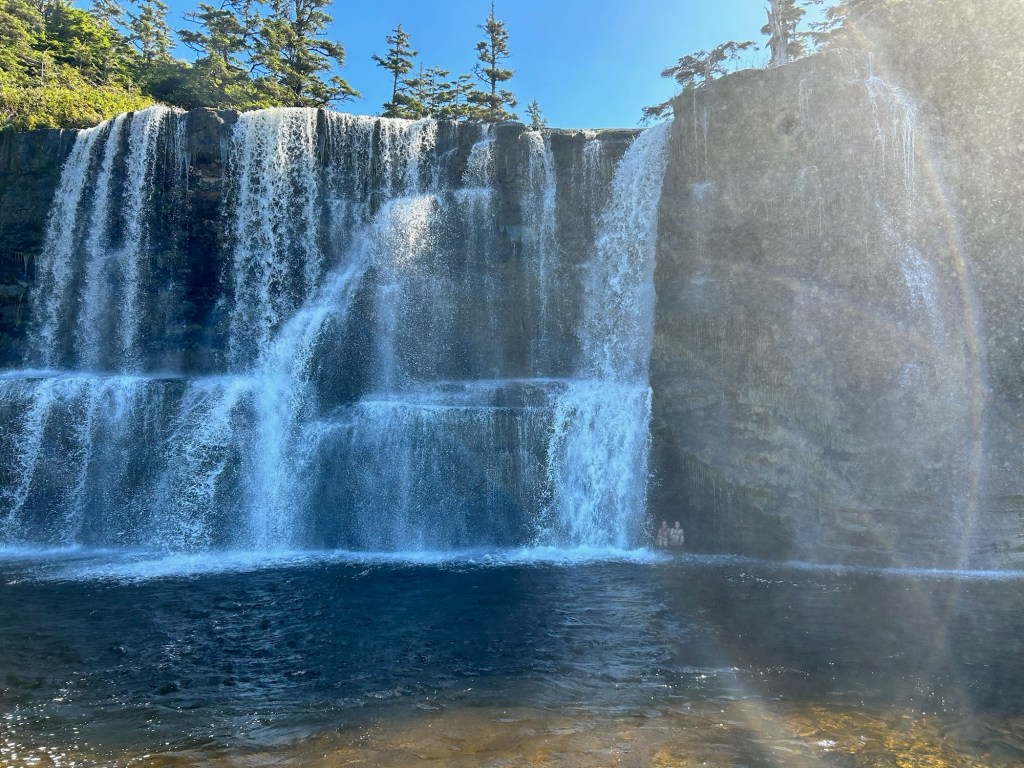
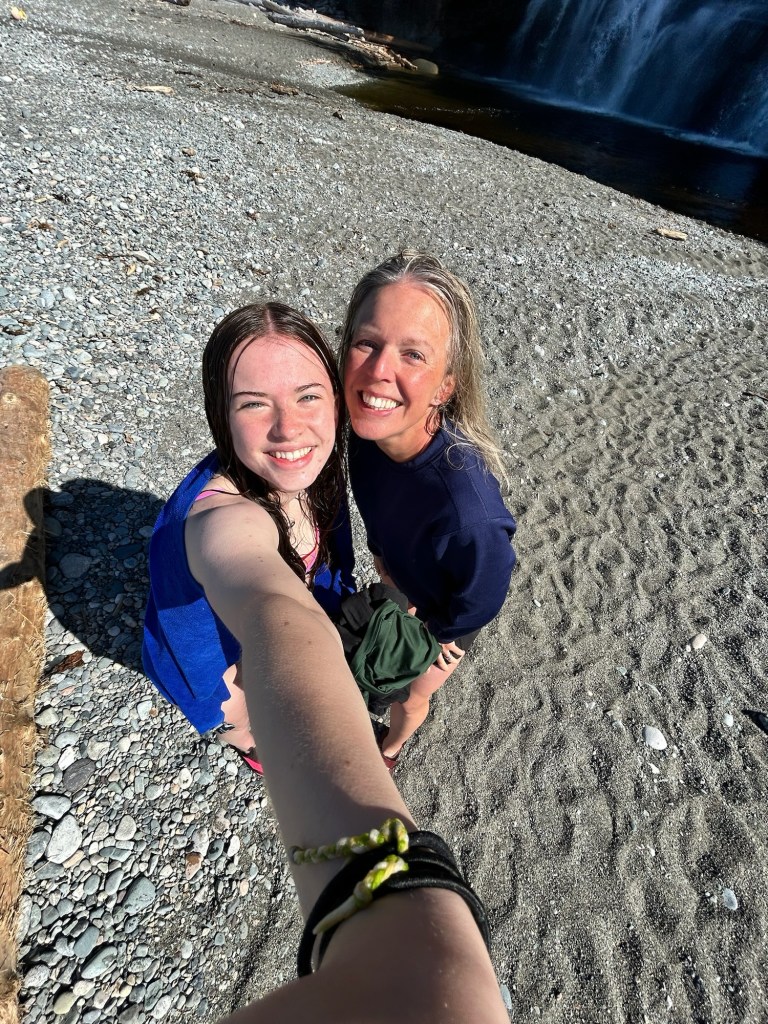
We had been told that a dip in the pool below Tsusiat falls was an absolute must before we packed up and carried on, so even though the sun was barely gaining warmth, and the water was freezing, we dove in to swim behind the falls for a very refreshing couple of minutes. Giggling and shrieking the whole time.
Day 5 was our last full day and night on the trail, the challenges of the south end of the trail were forgotten, and spirits were high as we set off for a gorgeous day of clear skies and a lot of beach walking.
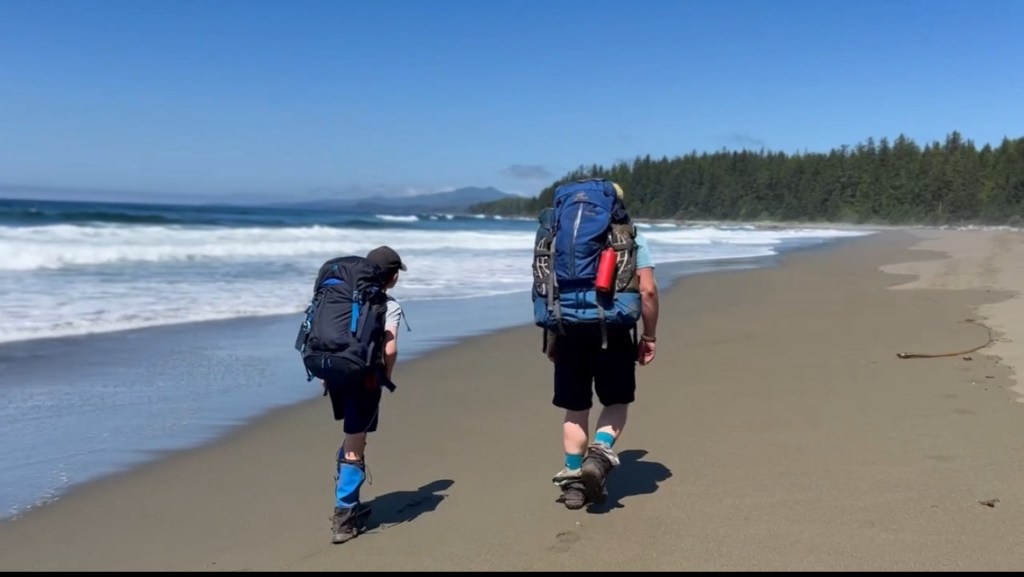
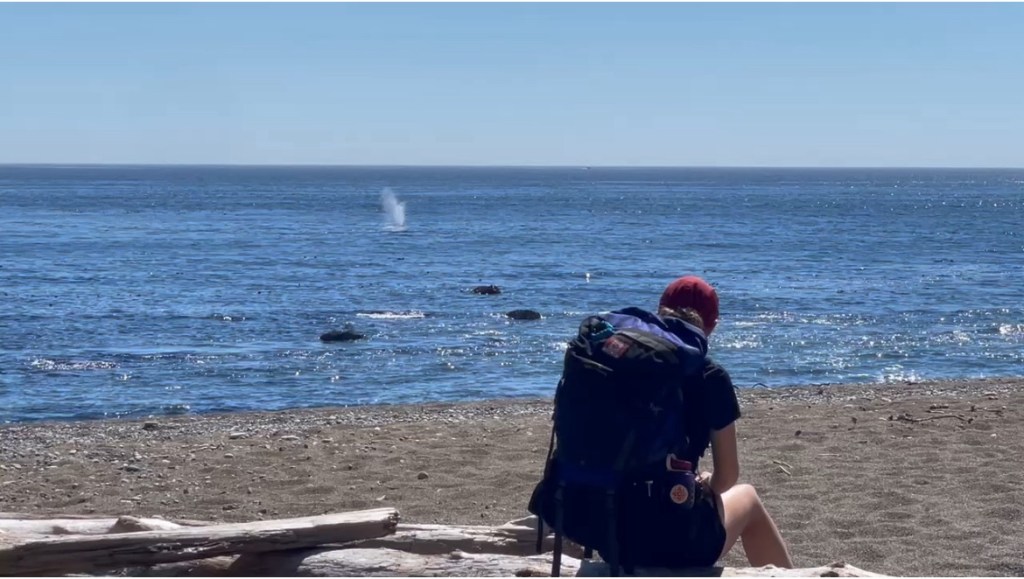
Grey whales spouting to our left, bald eagles overhead, lush forest to our right. Our packs were lighter, our legs were stronger. I felt like I was watching the layers of societal pressure and anxiety peel away from my kids. Flakes of self-doubt shedding, falling to mix with the sand, waiting to be absorbed by the sea. Hair tucked into messy braids, skin salty, nails gritty, those girls have never looked more beautiful.
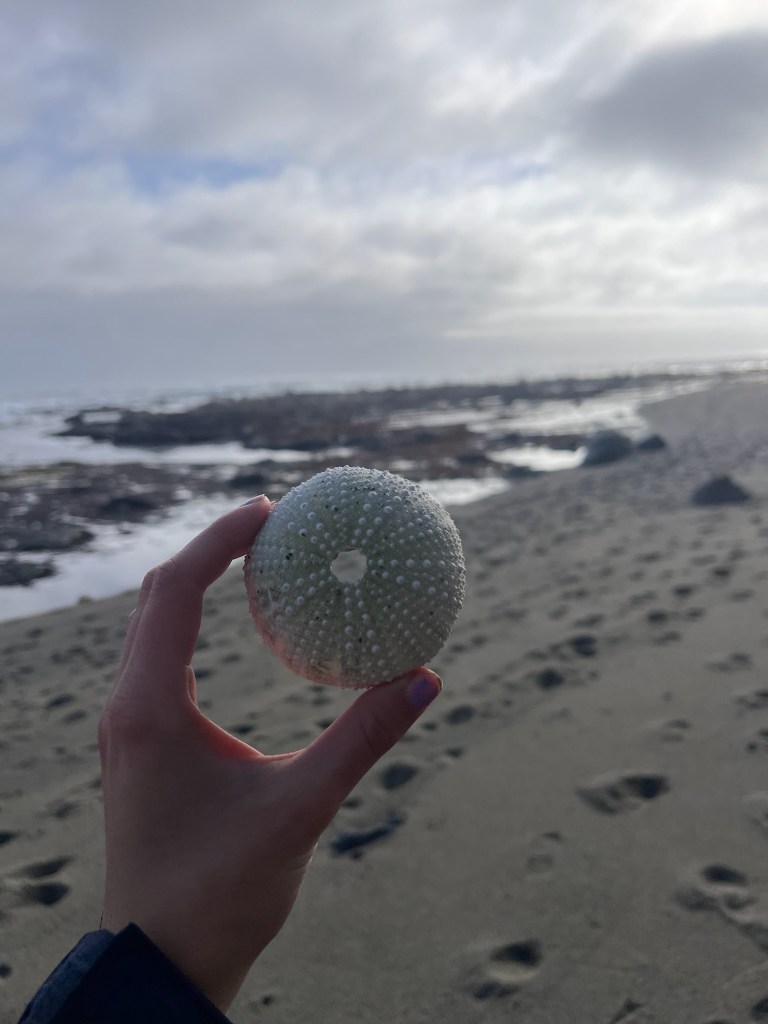
How can we capture this feeling so we can mix it into our lives back home? Why does it take 5 days of no cellphones and schedules before our nervous systems settle to the rhythm of the sun and waves? Must it take a heavy pack and impossible trail for them to see just how strong they really are?
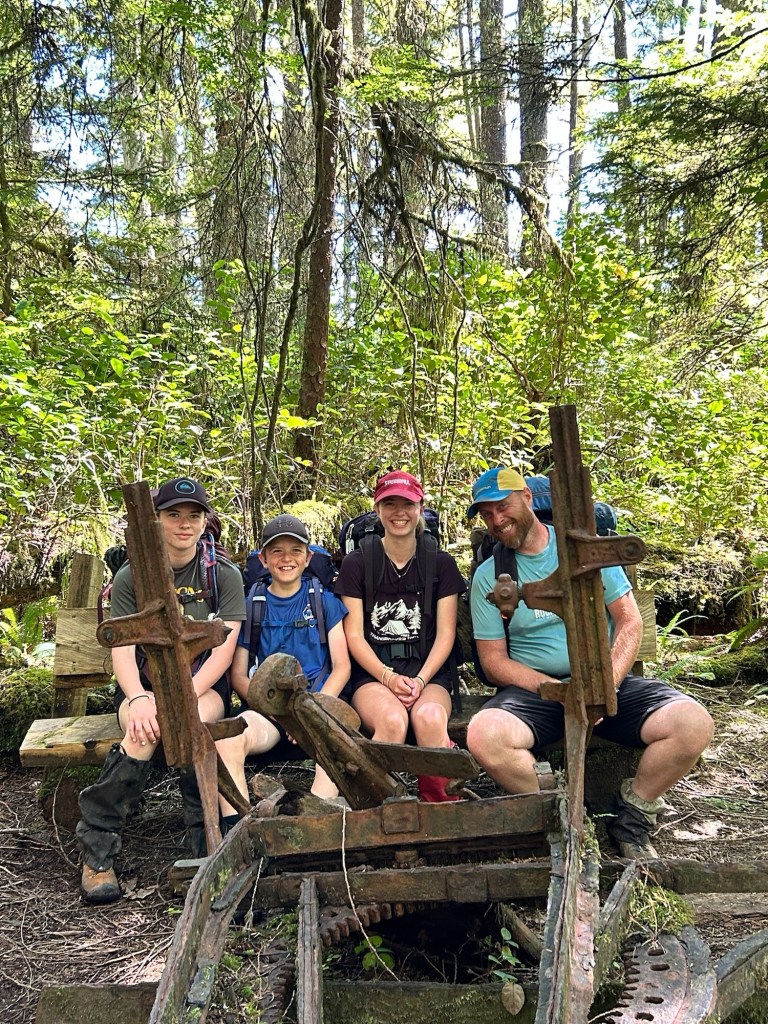
We end the day early, setting up camp while the sun was still high and pushing temperatures into the 30’s. The extra time allows us to explore a bit, the kids disappear together to find driftwood for a fire and Kirk and I are left at camp, watching grey whales roll in the shallow water within 40 feet of shore, scraping barnacles off their backs in a dance of rolling fins and tails.
Kirk starts yelling, pointing at the water. A pod of orcas racing and jumping as they travel by, slowing briefly as if to give us a better look. We start running down the beach, yelling to get the kids attention to look out. They are already staring, mouths gaping, the significance of this moment is not lost on them.
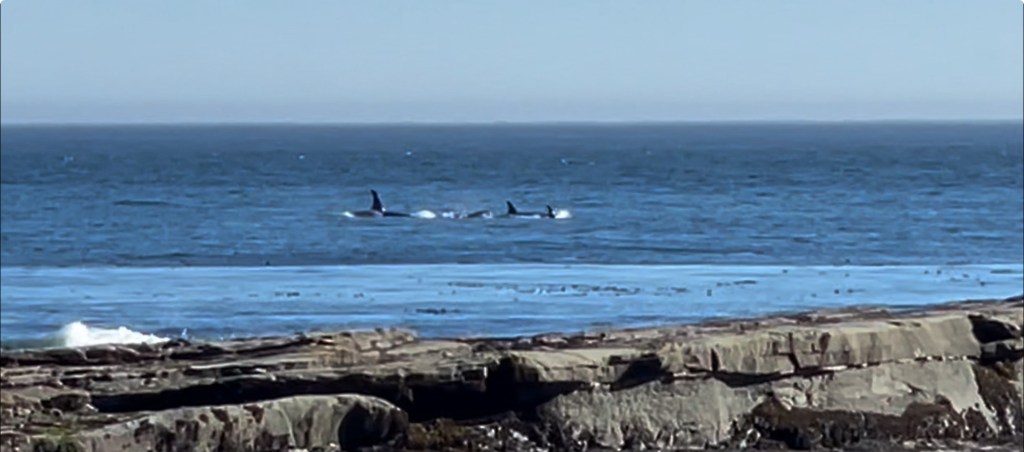
A national parks conservation officer was camping nearby to monitor bear activity in the area, and she was nearly bursting with excitement, telling us it must be a transient pod, an extremely rare sighting, and that they are likely on the hunt.
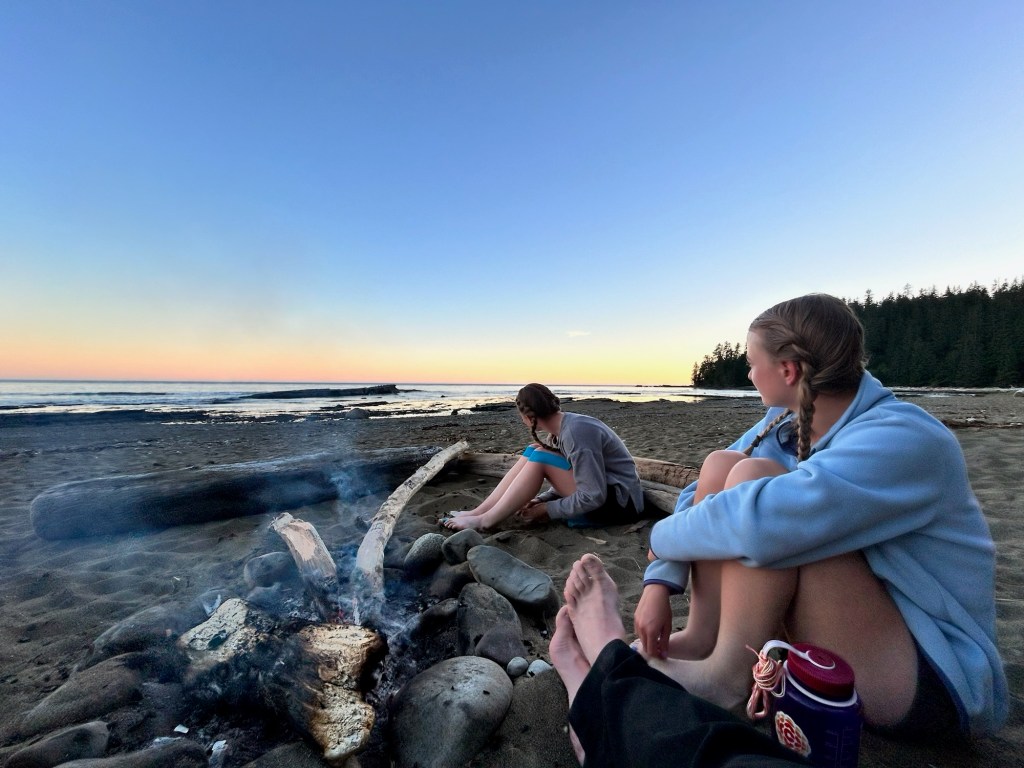
The rest of the night passes with us sitting around the fire, watching the grey whales continue to roll among the quiet water. We are mostly being ridiculous together; my favourite way to be, and a few moments of silence as we soak it all in. Driftwood smoke floating like thoughts unsaid between us. That’s ok. Not everything needs words.
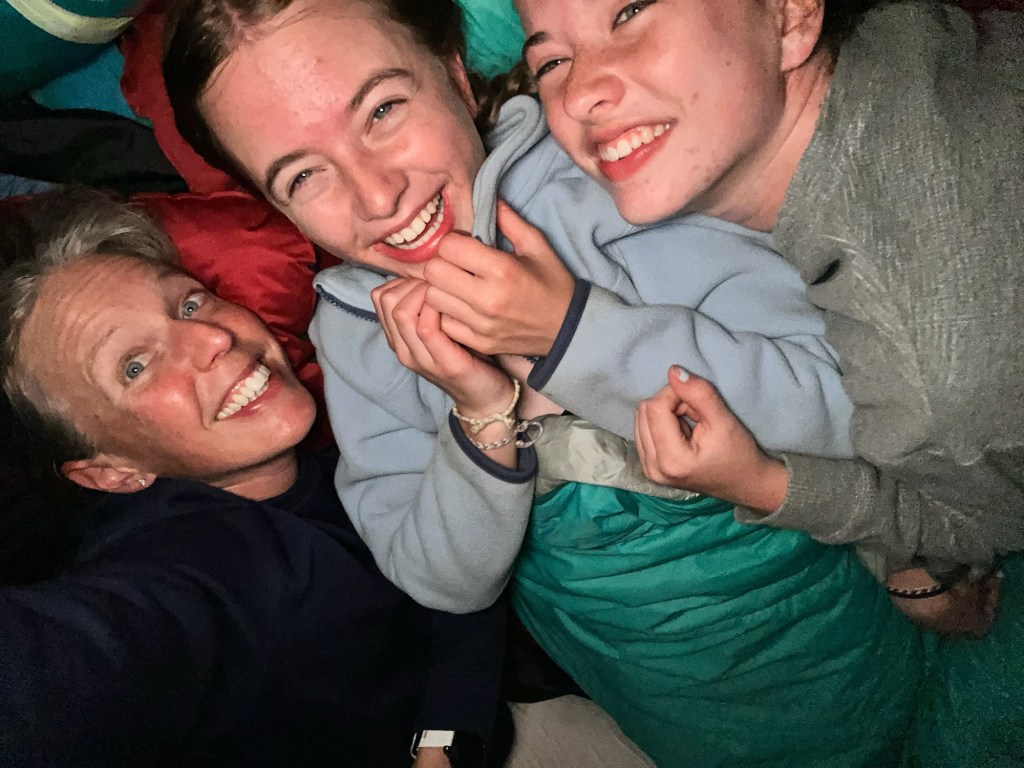
The next morning, Kirk snuck out and packed up early to tackle the last 12km at a quicker pace so he could catch the mid day shuttle bus back to the truck at the south end, and could leave the kids and I to slowly make our way out.
We took full advantage of the morning, laying around in the sun, enjoying the last moments of beach life, before packing up and heading onto the trail. The last 12km is the easiest of the whole trail. Well manicured and dry; a real walk in the park.
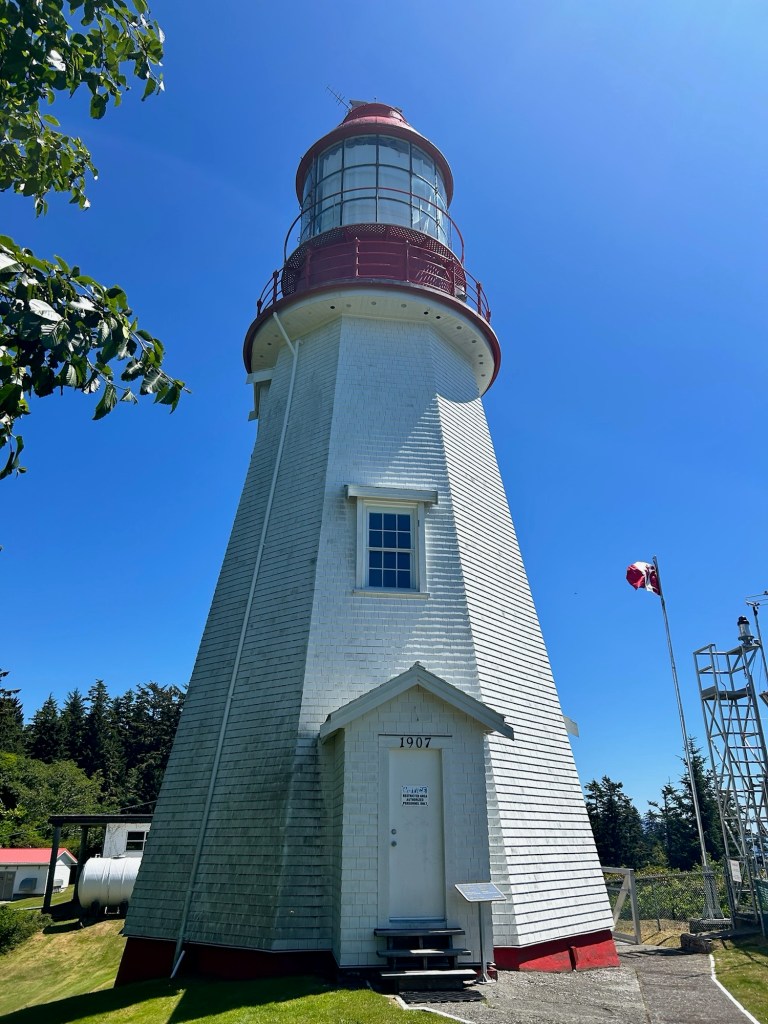
Lunch was at Carmanah lighthouse where the friendly lighthouse keeper came out to say hi and to share stories of his solitary life.
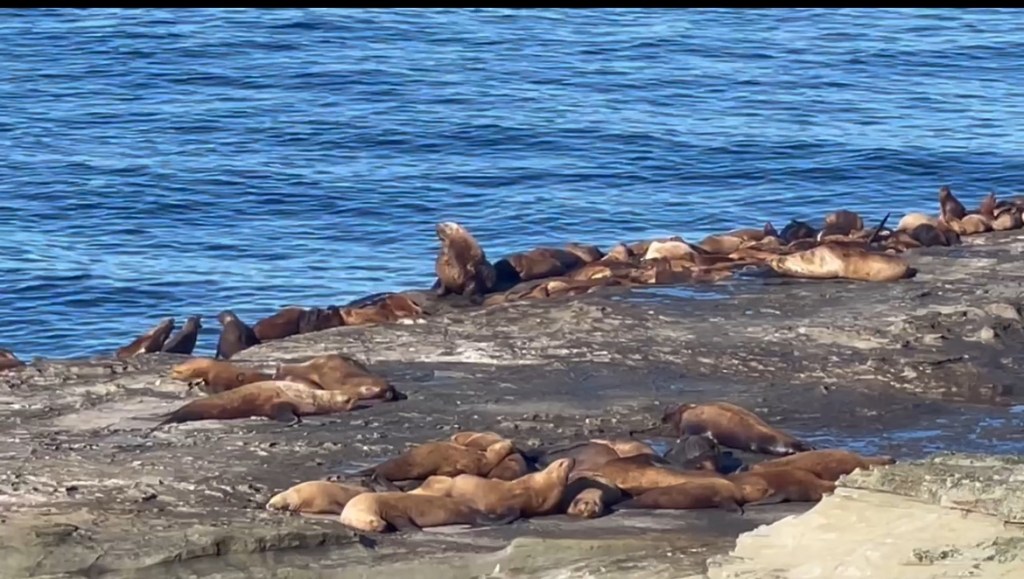
A short and entertaining visit to the sea lions covering the rocks nearby, and then back to the trail to finish the day.
More ladders, even though we could see Pachena Bay where the trail ends. Patience was running out.
And then, just like that, the trail was done. The trail head hut was closed for the day, so we plopped our bags down on the picnic table out front and pulled out our last, carefully rationed snacks. A few Mike N Ike’s and a handful of Skittles shared between us. A couple hours to kill before Kirk would make his way back to us on the windy forestry roads.
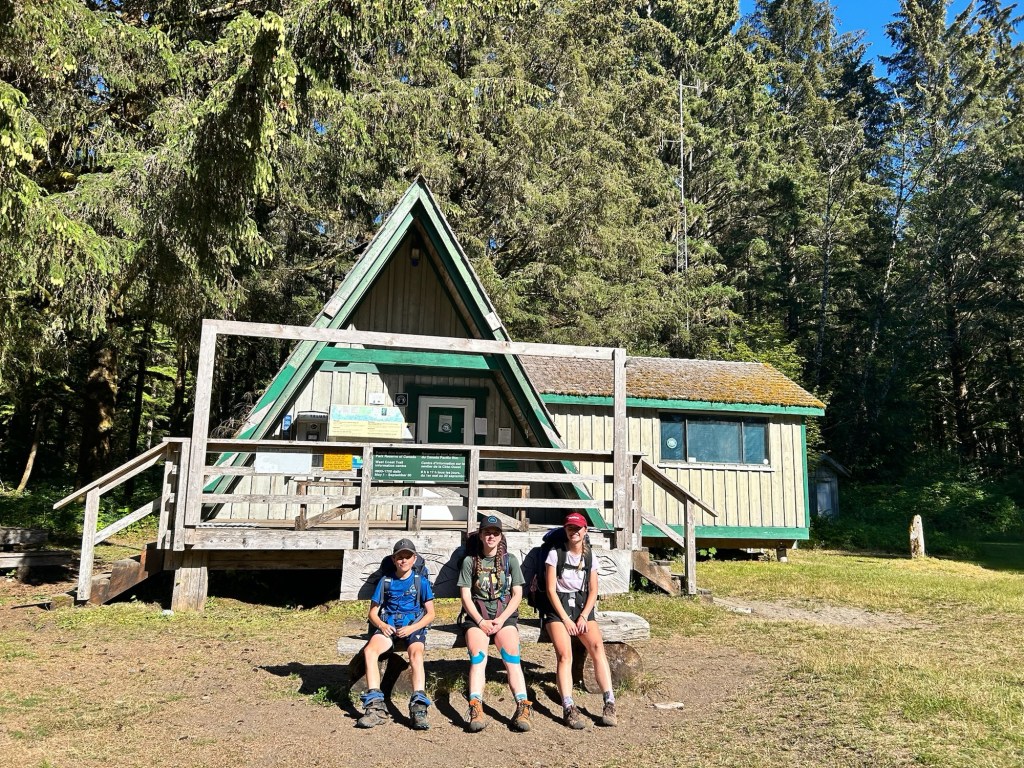
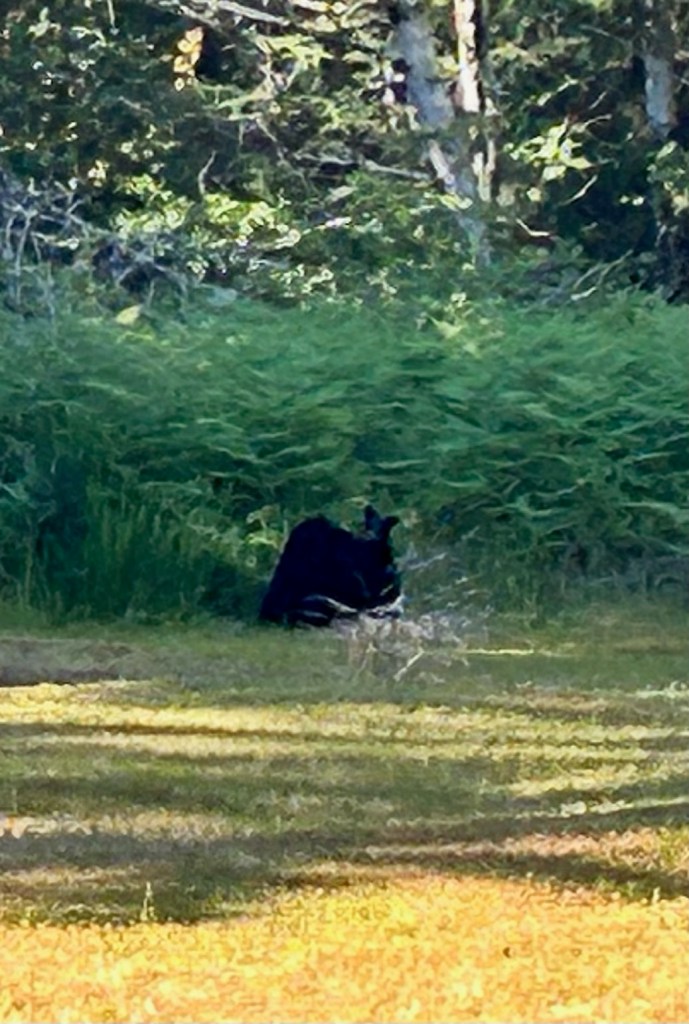
We had barely finished our candy when a mama black bear and her two cubs popped out of the bushes, about 50ft away from where we were sitting. I quieted my own mama bear instincts once I saw she wasn’t too interested in us, and we picked up our bags and relocated to the beach a ways away to give her lots of space to do her thing.
We sprawled out on the sand and dozed off for a couple hours, getting up only to dip in the water and to find ice cream at the campground nearby. We were still pretty far from civilization, so we’re pretty grateful for the little campground convenience store and the cash I had tucked into my backpack.
Kirk arrived with the truck at about 8pm and we made the 1.5 hr drive to Port Alberni where we found some burgers for dinner and an absolutely adorable hostel that thankfully had enough beds for us.
This trip was years in the making and hopefully represents a core memory for the kids, a permanent reminder of the strength they already have, and the beauty that’s worth finding even if it’s a struggle.
I also hope the trail continues to be cared for in a way that can keep it wild enough to maintain the element of adventure, but protected enough that hikers don’t destroy this incredibly beautiful place. And wouldn’t it be cool if one day, the next generation gets to experience the trail for themselves in another few decades.
 Run me Wild